
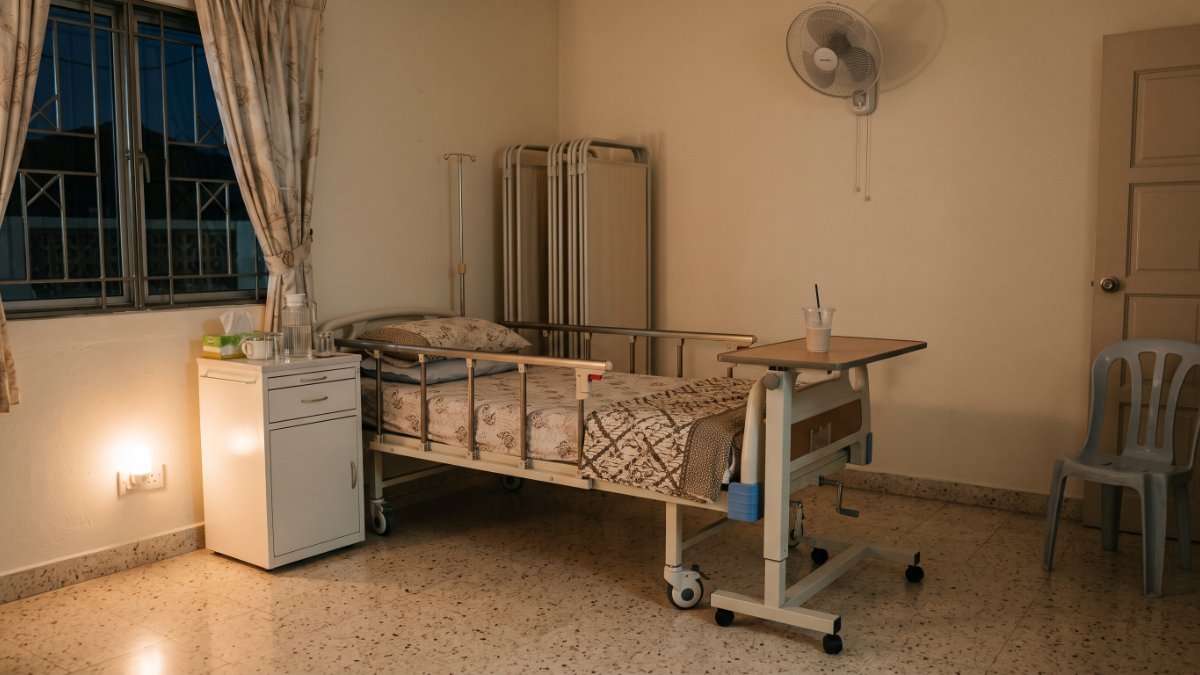
Hospital furniture at home makes care easier, but it also adds wheels, edges and cables to a small room. The space right around the bed becomes the busiest area in the house. It is where meals, medicines, washing, transfers and night-time checks all happen. At Neolee Rehab Supply, we call this the bedside zone, and we think it deserves its own safety check.
This guide looks at the hazards that build up around a care bed and how to control them. It focuses on stability, weight limits, spills, cables, lighting and hygiene. It is practical home information, not medical advice. A nurse or occupational therapist can review the room if the person has a high risk of falls.
Why the Bedside Zone Needs Its Own Plan
Furniture usually arrives one piece at a time. A bed comes first, then a table, then a cabinet, then a screen. Each item makes sense alone. Together, they can crowd the floor and create new risks.
A person getting out of bed may grab the nearest surface for balance. A carer working at night may not see a cable or a wheel. Spills on a smooth floor can go unnoticed. Planning the zone as a whole helps you spot these problems before someone gets hurt.
Our hospital furniture range covers the main pieces used around a care bed. Use the checks below for any furniture you already have, too.
Know What Each Surface Can Hold
Every piece of hospital furniture has a weight limit. It tells you how much the top or shelves can carry safely. It does not mean the person can lean their full weight on it.
The overbed table
An overbed table slides over the bed so the person can eat, read or write while sitting up. Our Overbed Table With Wheels has a laminated wood surface and a steel frame. It adjusts in height from 75cm to 99cm and has a 30kg load capacity.
A table on wheels can roll away if someone pushes on it to stand up. Make it clear to everyone, including the person in bed, that the table is not a support for standing. If the person needs help to stand, ask the therapist about a suitable aid.
The bedside cabinet
Our Hospital Bedside Cabinet is made of ABS plastic, a tough and easy-to-clean material. It has a top drawer, a large bottom cabinet and a slide-out tray, and it is designed to match standard hospital beds. Its load capacity is 45kg.
Keep heavy items low, in the bottom cabinet. A top-heavy cabinet is more likely to tip when a drawer is pulled out.
Match Furniture Heights to the Bed
A care bed can often be raised and lowered. The furniture around it should still work at each height you use.
Check the overbed table at the bed’s usual height for meals. The person should be able to reach the table without leaning far forward.
Then check the cabinet. Items the person uses often, such as tissues or a water cup, should be within an easy arm’s reach. If they have to stretch, they may lean over the bed edge and lose balance.
Lock Wheels as a Habit
Wheels make furniture easy to move for cleaning and care. They also let furniture slide when you least expect it.
Build one simple habit: lock the wheels every time a piece stops moving. Check the bed wheels too, especially before a transfer. A short sign at the foot of the bed can remind helpers who are new to the routine.
Look at the wheels once a week. Remove hair and threads that wrap around them, because these can stop the locks from holding.
Manage Cables, Spills and Clutter
A care bed often needs power for an electric frame, an air mattress pump or a reading lamp. Cables on the floor are easy to trip over in the dark.
Run cables along the wall, behind furniture, never across the path from the bed to the door. Keep them away from wheels, which can crush the cable when furniture moves. Use one sturdy extension with a switch rather than a chain of adaptors.
Spills are another quiet hazard. Drinks, lotions and water from washing can leave a slippery patch beside the bed. Keep a cloth within reach and wipe spills straight away. Use cups with lids if the person’s hands shake.
Clutter builds up fast in a care room. Clear the floor each evening so night checks are safe.
Light the Zone for Night-Time Care
Many falls happen at night, when the person gets up to use the toilet or a carer checks on them in the dark. A bedside zone that is safe by day can feel very different at 3am.
Place a soft night light low on the wall, so it lights the floor without shining in the person’s eyes. Keep a lamp switch within easy reach of the bed. Make sure the path to the bathroom is lit as well.
Keep Clean and Used Items Apart
The bedside zone handles both clean supplies and used items. Mixing them makes infection more likely and the room harder to keep tidy.
Give each type its own place. Keep clean dressings, gloves and pads in the cabinet. Keep a lined bin with a lid for used items, away from food and drinks on the table. Wipe the overbed table before and after meals.
Give Privacy Without Blocking Help
A privacy screen lets the person wash or change with dignity, especially in a shared room. Our Ward Screen is a 4-panel privacy screen, 180cm tall, on a foldable steel frame with castor wheels. It weighs 8kg, so it is light enough to move when needed.
Place the screen so it does not block the door, the path to the bathroom or the carer’s view of the person. Lock its wheels when it is in use, and fold it away when it is not needed.
Frequently Asked Questions
1. Can an overbed table help someone stand up?
No. An overbed table is not made to support body weight and may roll away. Ask a therapist about a suitable standing aid.
2. What is a load capacity on hospital furniture?
It is the most weight a surface or shelf is made to carry. It does not mean the furniture can support a person leaning on it.
3. How can I stop hospital furniture from rolling?
Lock the wheels each time the furniture stops moving. Clean the wheels regularly so the locks keep holding.
4. Where should cables go around a hospital bed?
Run them along the wall and behind furniture, away from walking paths and wheels. Use one sturdy extension rather than many adaptors.
5. How do I keep the bedside area safe at night?
Use a low night light, keep a lamp switch within reach and clear the floor each evening. Light the path to the bathroom as well.

