
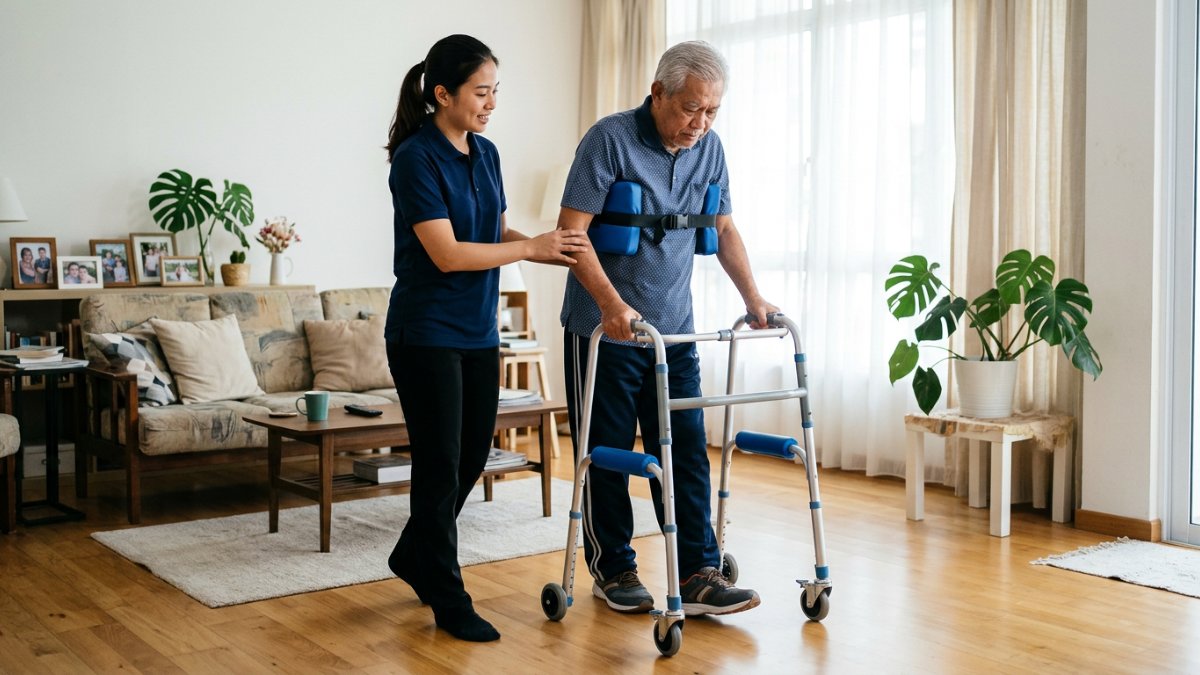
A hemiplegia walker is a wheeled frame that supports the chest and underarms while a person practises walking. Among walking aids, it gives much more upper body support than a cane or a standard frame. It is often used after a stroke, when one side of the body is weak.
Hemiplegia means weakness or loss of movement on one side of the body. It often follows a stroke, but it can also come from other brain or nerve conditions. At Neolee Rehab Supply, our Walking Aids range includes hemiplegia walkers for both adults and children, alongside canes and frames.
This guide explains how the walker works, who it may suit and what to ask the therapist. It is general equipment information, not a treatment plan.
How a hemiplegia walker is different from other walking aids
Most walking aids rely on the hands and arms. A cane needs one strong hand. A walking frame needs two hands and good balance to lift or push it.
After a stroke, one arm and one leg may be weak at the same time. Holding a frame evenly may not be possible. The person may also tire quickly or lean to the weaker side.
A hemiplegia walker takes some of that load off the arms. Padded supports sit around the chest and under the arms. The frame rolls on castors, so the person can move forward without lifting it. The therapist or carer can focus on the steps instead of holding the person upright.
What our hemiplegia walkers include
Our Hemiplegia Rehabilitation Walker (Adult) suits users between 120cm and 160cm tall. The Hemiplegia Rehabilitation Walker (Child) suits children between 60cm and 100cm tall.
Both models share the same main features:
- Soft padded chest and underarm supports for upper body stability.
- Adjustable height and width, so the supports sit in the right place.
- A durable chrome frame.
- Smooth castors that can be locked when the person stands still.
- Anti-rollover castors to help keep the frame stable.
The height range is the first thing to check. If the person is outside the listed range, the supports will not sit correctly.
Who may benefit from a hemiplegia walker
A hemiplegia walker may suit someone who wants to practise walking but cannot yet hold their own weight safely with a frame. It is often used in rehabilitation centres, and some families use it at home with guidance.
It may suit:
- Adults relearning to walk after a stroke.
- People with weakness on one side after a brain or nerve injury.
- Children with hemiplegia who need support during walking practice.
- Users who lean or tire quickly when walking with a standard frame.
It may not suit someone who can already walk well with a cane. It may also not suit a person who cannot stand at all, even with support. The therapist is the best person to judge which stage the person is at.
How it is usually used at home
The walker is mainly a training aid. It supports walking practice rather than replacing a wheelchair for long distances.
A typical session starts with the person seated. The carer adjusts the supports to the right height and locks the castors. The person stands with help and leans lightly into the supports. Then the castor locks are released, and the person takes short steps forward.
Sessions are usually short at first. The therapist will say how long and how often. A carer should stay close, especially in the early weeks.
Clear the floor before each session. Move rugs, cables and low furniture out of the way. A smooth, level floor makes the castors roll more safely.
Setting the supports at the right height
Good fit makes the walker safer and more comfortable. Ask the therapist to set it up the first time, then mark the settings with tape.
The underarm supports should sit just below the armpits. They should support the body, not push the shoulders up towards the ears. If the shoulders lift, lower the supports a little.
The chest support should rest lightly against the upper body. The person should be able to breathe and talk comfortably. If the pad presses hard, adjust the width or position.
The feet should reach the floor flat, with the knees slightly bent. If the person is on tiptoe, the walker is too high.
Recheck the fit after any change in the person’s posture, weight or footwear. Children may need new settings as they grow.
Other walking aids to consider as recovery continues
Needs often change as strength returns. Many people move from more support to less over weeks or months.
When standing up becomes easier, a frame with dual-level handles can help. The Rise Up Walker 2-In-1 is a reciprocal walking frame with lower handles to push up from a chair. It suits people who can use both hands but need help rising to stand.
Later, some people progress to a quad cane or a single walking stick. The therapist will advise when to change, so the person is not moved on too early.
Questions to ask the therapist before buying
Bring these questions to the next appointment:
- Is the person ready for walking practice with a supported walker?
- Does their height fall within the walker’s range?
- How long should each session last, and how often?
- Should practice happen only when a therapist or trained carer is present?
- What signs mean we should stop a session early?
Write down the answers and keep them near the walker. This helps every carer follow the same routine.
Safety tips for every session
Stop the session if the person feels dizzy, short of breath or in pain. Help them sit down, lock the castors and rest. Contact the doctor or therapist if the symptoms do not settle quickly.
Check the walker before each use. Make sure the height clamps are tight and the castor locks hold. Look for worn padding that could rub the skin.
Watch the weak arm and shoulder. They should rest comfortably and not hang or get caught. Ask the therapist how to position them.
Frequently Asked Questions
1. What does hemiplegia mean?
It means weakness or loss of movement on one side of the body. It often follows a stroke, but other brain or nerve conditions can cause it too.
2. Is a hemiplegia walker the same as a walking frame?
No. A walking frame relies on the hands and arms. A hemiplegia walker adds padded chest and underarm supports and rolls on castors.
3. Can a child use a hemiplegia walker?
Yes, if the walker is sized for children. Our child model suits children between 60cm and 100cm tall.
4. Can the walker be used outdoors?
It is mainly a training aid for smooth, level floors. Ask the therapist before using it anywhere else.
5. How do I know when to move to a different walking aid?
Your therapist will review progress and suggest when to change. Do not move to less support without their advice.

