
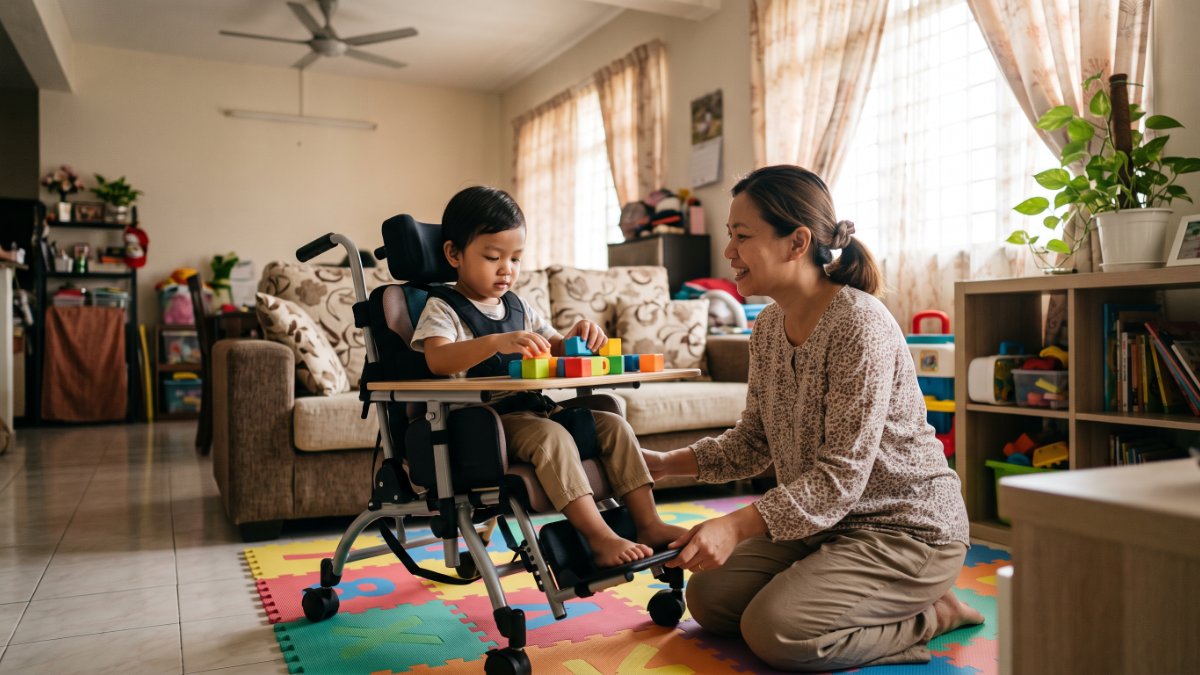
Children’s products for mobility and positioning have a harder job than adult equipment. They must fit a body that keeps growing and support a child who is still developing. They also have to suit the routines of a busy family. At Neolee Rehab Supply, we meet many parents who feel unsure where to start.
This checklist breaks the choice into steps you can work through with your child’s therapist.
Positioning means helping a child sit, stand or lie in a steady, comfortable posture. Good positioning can make it easier for a child to eat, play, learn and join family time. This guide gives practical equipment information, not medical advice. Your child’s doctor or therapist should guide any choice that affects posture, breathing or skin.
Begin With What Your Child Wants to Do
Start with activities, not equipment. Think about a normal day and list the moments when your child needs support.
For example:
- Sitting upright at the table for meals or homework.
- Going out to the shops, the park or a clinic visit.
- Bath time, when a slippery tub makes holding a child hard.
- Resting or playing on the floor with brothers and sisters.
Each moment may need a different kind of support. Our children’s product range includes strollers, seating and bath support, so it helps to know which moments matter most to your family. Share your list with the therapist. It turns a vague wish into clear goals.
Measure Today, Not Next Year
It is tempting to buy a size up so the equipment lasts longer. The problem is that a seat that is too big today gives poor support today. A child may slump to one side, slide forward or struggle to keep their head up.
Ask the therapist to take the measurements that matter for the product you are considering. These often include:
- Hip width, for seat width.
- Back of the hip to behind the knee, for seat depth.
- Knee to heel, for footrest height.
- Seat to shoulder and seat to head, for back and head support.
Write the date next to each measurement. That makes it easy to see later how much your child has grown. Choose equipment where the adjustments cover your child’s size now, with some room to grow inside the maker’s range.
Check Posture in the Equipment, Not Just in the Shop
A product can look perfect in a photo and still not suit your child. Once your child is seated, step back and look carefully from the front and the side.
What to look for
- Head: is it upright and steady, not tipping forward or to one side?
- Trunk: is the body centred, not leaning or twisting?
- Hips: are they back in the seat, not sliding forward?
- Feet: do they rest flat on the footplate or floor?
Our Joyride Child Chair Frame is also called a sitting posture correction chair. It is designed for children with cerebral palsy and has an adjustable footrest and a table. The table can give a child a stable surface for play or meals while they sit. Ask the therapist to help set the footrest and check the posture with your child in the chair.
Think About Going Out
Outings bring their own challenges. Lifting a child and equipment into a car takes effort. So does folding a frame on a hot pavement or finding space in a clinic waiting room.
Our Joyride CP Stroller is a lightweight special needs stroller. It is for children with cerebral palsy, developmental disabilities and mobility challenges who need extra support. You can compare similar options in our special stroller section.
When comparing strollers, try the fold and the lift yourself. Ask each person who will use the stroller to try it too, including grandparents or helpers. Equipment that only one adult can manage limits how often your child gets out.
Heat is worth planning for as well. Seats, frames and straps left in a parked car or in the sun can become hot to touch. Before your child sits down, feel the seat and buckles with your hand. On hot days, a light cover and regular drinks help keep your child comfortable.
Plan Bath Time Separately
Bath time is often one of the hardest moments for parents. Wet skin, a slippery tub and a child who may arch or slide make it tiring. Back strain is common.
A bath seat can help by holding your child in a safe, steady position. Our Joyride Bluefin Bath Chair is a paediatric bath chair for children with special needs. It has a reclining backrest and adjusts to the child.
Even with a bath chair, never leave a child alone in the bath, not even for a moment. Check the water temperature before your child goes in.
Watch the Skin and Comfort
Children cannot always tell you when something hurts. Check your child’s skin after they have used new equipment, especially at first.
Look at the back of the knees, the hips, the bottom and the shoulders. Red marks that fade within a short time are common. Marks that stay, blisters or broken skin are a sign that the fit needs to change. Contact the therapist or doctor if you see them.
Watch your child’s mood too. Crying, arching or pulling at straps can be a sign of discomfort, not just a bad day.
Schedule Regular Fit Reviews
Children grow in spurts. Equipment that fitted well six months ago may now be too small. Agree with the therapist how often to review the fit, and add the dates to your calendar.
Bring your earlier measurements to each review. Also review the fit sooner if:
- Your child seems uncomfortable or slides down more often.
- New red marks appear on the skin.
- Your child has had surgery, a new splint or a change in therapy.
Keep the manual, the receipt and the model details in one folder. These help us or the maker when you need parts or adjustments.
Frequently Asked Questions
1. Should I buy a size bigger so my child can grow into it?
It is better to fit your child today, within the product’s adjustment range. A seat that is too big gives poor support now.
2. Who should measure my child for seating or a stroller?
Your child’s physiotherapist or occupational therapist is the best person. They know which measurements matter for your child’s posture.
3. How do I know if the posture in a chair is right?
Your child’s head, trunk and hips should be centred and steady, with feet supported. Ask the therapist to check the set-up with you.
4. Can a bath chair make it safe to leave my child for a moment?
No. A bath chair supports your child, but an adult must always stay with them in the bath.
5. How often should children’s mobility equipment be checked for fit?
Agree a review schedule with the therapist. Also check sooner after growth spurts, new red marks or any change in your child’s care.

