
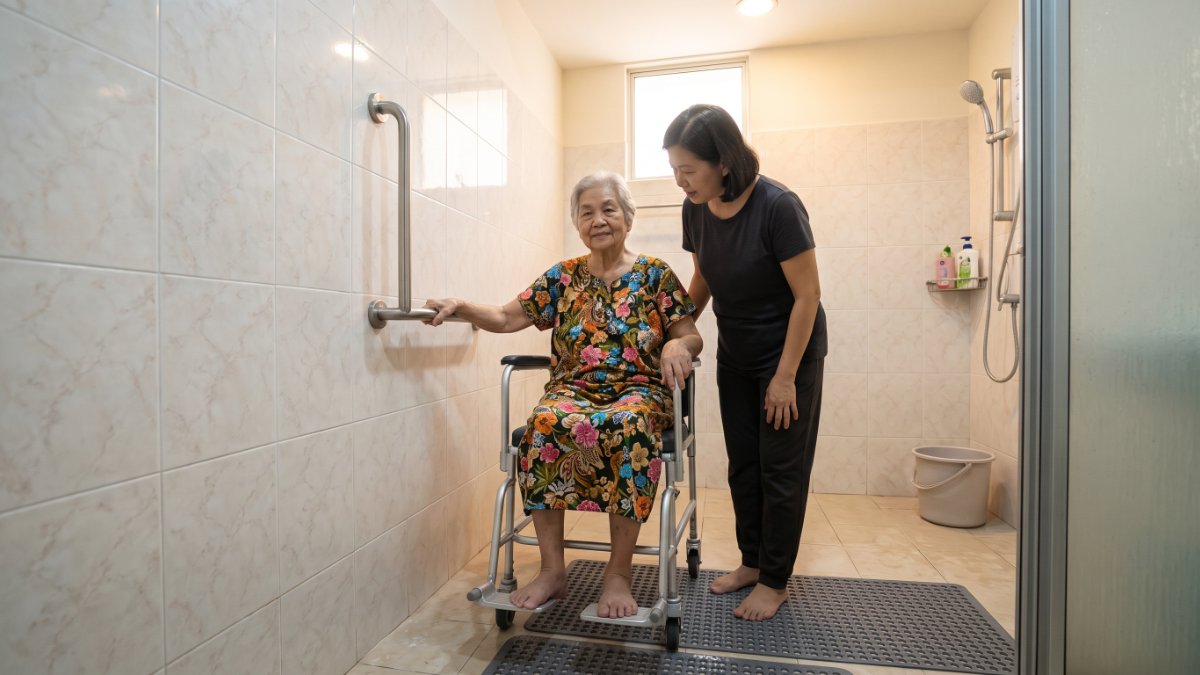
Bathroom care for an older adult is about more than one good chair or handrail. Wet floors, tight corners and repeated sitting and standing all happen in a small space. At Neolee Rehab Supply, we find the safest bathrooms are planned around how the person moves, from the bedroom door to the shower and back. You can see equipment for the toilet and shower in our bathroom care range.
This checklist walks you through that route step by step. It is general information to help you plan, not medical advice. If the person has fallen recently, feels dizzy or struggles to stand, ask a doctor or occupational therapist to assess them first. An occupational therapist is a health professional who helps people manage daily tasks safely at home.
Walk the Route Before You Buy Anything
Many bathroom falls happen on the way there, not inside. Before you look at equipment, walk the route the person takes at night.
Do this walk in the evening, with the lights the person would normally use. Look for:
- Rugs or mats that slide or curl at the edges.
- Wires, shoes or laundry left on the floor.
- A step or raised threshold at the bathroom door.
- Dark patches where a light switch is hard to reach.
Fix what you can first. Move clutter, tape down or remove loose rugs and add a night light along the corridor. These changes cost little and help straight away.
Make the Floor and Lighting Work for Wet Feet
Bathroom floors become slippery as soon as they are wet. Soap and shampoo make them worse. A non-slip mat inside the shower area can help, as long as it stays flat and grips the floor.
Clean the floor and mats often. Soap scum builds up and quietly reduces grip over time.
Lighting matters as much as the floor. Older eyes need more light to judge edges and wet patches. Choose bright, even lighting with switches close to the door. Many families add a small plug-in night light so the person never walks into a dark bathroom.
Add Something Solid to Hold
Hands need a firm place to rest when the person sits, stands or turns. Towel rails, basin edges and soap dishes are not made to take body weight. They can snap or pull away from the wall.
A proper handrail is fixed into the wall and made to carry weight. Our U-Shape Folding Bathroom Handrail comes in 60cm or 75cm lengths. It has a 90-degree flip-up design, a glow-in-the-dark handle and a 150kg weight capacity. The flip-up design means it folds up against the wall when you need the space.
Where handrails usually help
- Beside the toilet, to help with sitting down and standing up.
- Inside or next to the shower, for balance while washing.
- At the bathroom entrance, if there is a step.
The right height and position depend on the person’s height, strength and which hand is stronger. A therapist can advise. Always check that the wall is strong enough, and have a competent installer fix the rail.
Sit Down to Shower When Standing Is Hard
Standing on a wet floor while washing is one of the riskiest moments in the day. A seat lets the person wash while sitting, which keeps both feet steady.
Our bathroom care range includes several types of support for the shower and toilet. When you compare them, check:
- Seat height: the person’s feet should rest flat on the floor.
- Weight capacity: compare it with the person’s weight.
- Size: it should fit the shower area with room for a carer.
- Drainage: water should run off the seat quickly.
If the person also needs help getting to the toilet, a chair that works as a commode may suit them better. You can compare these in our shower commode chairs section.
Keep the water warm, not hot
Very hot water can make some older adults feel faint, especially after standing for a while. Warm water is gentler and lowers the risk of scalds on thin skin. Let the person sit to dry and dress, too, because balancing on one leg to pull on clothes is a common moment for a slip.
Plan the Transfer, Not Just the Equipment
A transfer is any move from one seat or surface to another. Examples include moving from a wheelchair to the toilet, or from the toilet to a shower chair. Most bathroom falls happen during these moves.
Think about each transfer in turn. Ask where the person will place their feet and what they will hold. Ask where the carer will stand, and whether the door opens the right way.
Wheeled equipment can reduce the number of transfers. Our Beluga Chair 3-in-1 Shower Commode has a lightweight, rust-proof aluminium frame with wheels and a 120kg weight capacity. Because it works as a shower commode, the person may be able to stay seated from the bedroom to the shower. Always lock the wheels before the person sits down or stands up.
Leave Room for the Carer
Equipment may fit in the bathroom on paper but leave no room to help. A carer needs space to stand beside the person, bend safely and reach the taps.
Measure the clear floor space with all the equipment in place. Check the door too. A door that opens inwards can block access if the person falls behind it. Some families find a sliding or outward-opening door easier, but ask a contractor before changing anything.
Keep Equipment Clean, Dry and Checked
Bathroom equipment lives in a wet, soapy space, so it needs regular care. Check it once a week using this short list:
- Rubber feet and tips are present and not worn smooth.
- Screws, clips and folding joints are tight.
- Brakes on wheeled chairs still hold firmly.
- There is no rust, cracking or sharp edge.
Dry chairs and rails after use where you can. Clean them with mild products that the maker allows. Replace worn parts quickly, because a missing rubber tip can make a chair slide.
Frequently Asked Questions
1. Can a towel rail be used as a grab bar?
No. Towel rails are not built to take body weight and can pull away from the wall. Use a handrail that is made and installed for support.
2. Is a shower chair enough to prevent bathroom falls?
A shower chair helps, but it is only one part of bathroom care. Lighting, a clear route, handrails and safe transfers all matter too.
3. Where should I put a handrail in the bathroom?
Common spots are beside the toilet, in the shower area and at a step. The exact height depends on the person, so ask a therapist to advise.
4. How often should I check bathroom equipment?
A quick check once a week works for most homes. Also check after any wobble, noise or near-fall.
5. Who can assess bathroom safety for an older adult?
An occupational therapist can look at the person, their transfers and the bathroom layout. They can then suggest equipment and changes that suit them.

