
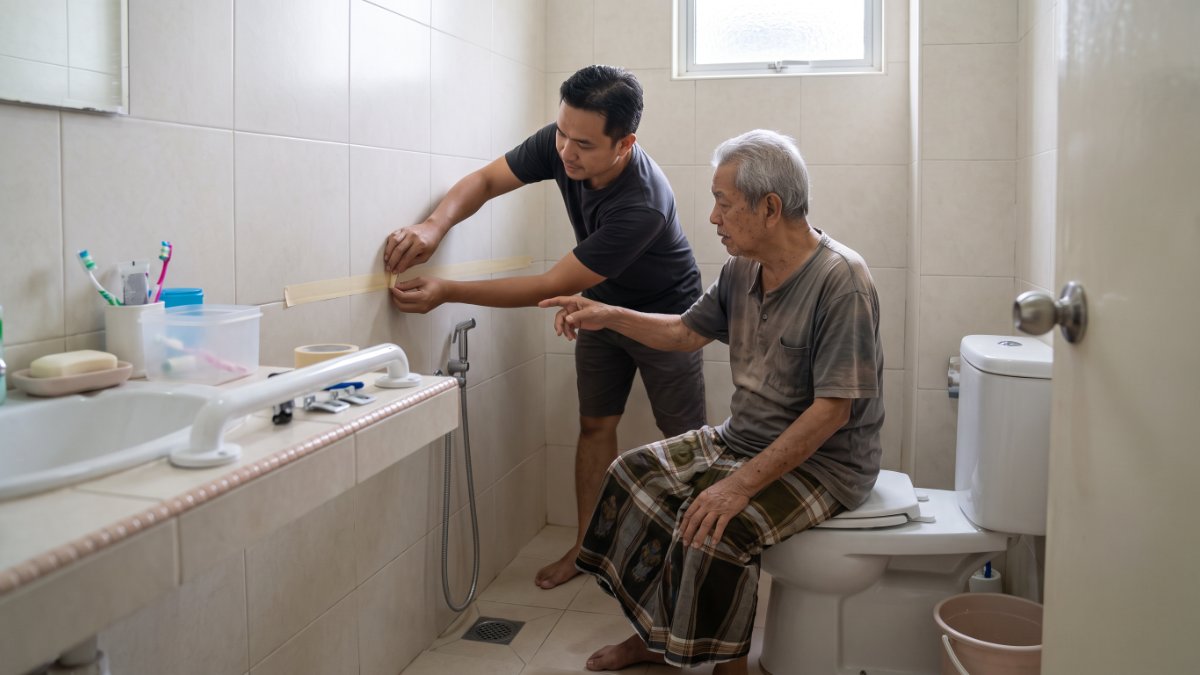
Bathroom grip bar installation considerations start with three things: the person, the wall and the movement the bar must support. A grip bar only helps when it sits in the right place and is fixed into a surface that can hold the load. Choosing a bar by colour or length first can leave a rail that is hard to reach or unsafe to rely on.
At Neolee Rehab Supply, we suggest watching how the person moves before deciding anything else. Our bathroom care range includes grip bars, handrails and seated options for the toilet and shower.
A grip bar, also called a grab bar, is a rail fixed to the wall for the person to hold. This guide covers what to check before a bar goes up and after it is fixed. It is practical home information, not medical advice. If the person has fallen recently or struggles to stand, ask an occupational therapist to assess the bathroom first.
Watch the Movement Before Choosing a Spot
Observe how the person uses the bathroom on a normal day. Notice how they approach the toilet, step into the shower, turn and lower themselves. Then watch how they stand up again.
Look for the moments when balance becomes uncertain. Note which hand they naturally reach with. These are the places where a bar will help most.
Do not ask the person to repeat a move that already looks unsafe. A therapist can assess it safely if the person has weakness, pain, poor balance or a history of falls.
Bathroom Grip Bar Installation Considerations: The Wall
A strong-looking rail can still fail if the wall or fixings cannot hold it. Tiles are only the surface. What matters is the structure behind them.
Ask these questions before drilling:
- What is the wall made of behind the tiles?
- Are there water pipes or electrical cables in that area?
- Which fixings does the bar’s instruction sheet call for?
- Who will install it, and have they fitted grip bars before?
Use a competent installer when you are unsure about the wall. Suction accessories do not give the same support as a properly fixed bar, so do not treat them as the same thing.
Choose the Length and Direction for the Task
Grip bars can be fitted in different directions. Each suits a different movement.
- Horizontal bars help while standing still or moving sideways, such as along the shower wall.
- Vertical bars are easy to reach at different heights, which helps when stepping in or out of the shower.
- Angled bars can help with one rising movement, such as standing up from the toilet.
Our Bathroom Safety Grip Bar – White has a non-slip textured surface and comes in lengths from 40cm to 80cm. Choose the length only after you know the reach zone and where the secure fixing points are. You can compare other rails in our grab bars and handrails section.
Mark the Spot and Try It First
Before anyone drills, mark the planned position with masking tape. Ask the person to stand or sit where they would use the bar and reach for the tape. Watch whether their hand lands there naturally, without stretching or bending.
Try it for each moment you are planning for, such as sitting down on the toilet and standing up again. Move the tape until the reach feels easy. A therapist can confirm the final height for the person.
This simple test takes a few minutes. It can save a second set of holes in the tiles.
Consider Colour and Visibility
Older eyes find it harder to see white objects against white tiles. A rail that blends into the wall can be missed when someone reaches for it quickly. Bright or contrasting colours are easier to spot, especially at night.
If the bathroom tiles are pale, consider a bar in a colour that stands out. Good lighting helps too. Keep a night light on the way to the bathroom so the bar is visible in the dark.
Look at the Whole Bathroom, Not Just the Bar
A grip bar cannot fix a slippery floor, a raised step, a loose mat or a blocked route. Check the drainage, lighting and the person’s footwear. Move toiletries so the person does not stretch across a wet floor to reach them.
Make sure the person does not have to step around a chair to reach the bar. The bar should be within easy reach at the moment they need it.
If standing remains hard even with a bar, the person may need to sit while washing. You can compare seated options in our shower commode chairs section.
Check the Finished Installation
Once the bar is fixed, test it before the person relies on it. Use this short list:
- The bar is firm, with no movement at the mounting points.
- The person can reach it without twisting or stretching.
- It does not block the door, shower screen or transfers.
- The grip surface is clean and free of soap scum.
Ask the person to try the movement once with a family member close by. Watch whether the bar is where their hand naturally goes. If not, it may be in the wrong spot.
Keep Checking After Installation
Bathrooms are wet, and fixings can loosen over time. Check the bar once a week. Pull firmly in the direction the person normally does. Look for rust, cracks around the tiles and loose screws.
Clean the grip with mild soap and water. Soap residue can make even a textured surface slippery. Stop using the bar straight away if it moves, and have it refitted before use.
Review the Set-Up When Needs Change
A bar that works well today may not suit the person after surgery, an illness or a change in walking. Review the bathroom when the person starts to need more help, uses a new walking aid or begins to avoid the bathroom.
Small changes made early can stop carers from using towel rails, basins or other fittings that were never made to take body weight.
Frequently Asked Questions
1. Can a towel rail be used as a bathroom grip bar?
No. A towel rail is not designed or fixed to support a person’s body weight. Use a grip bar that is made and installed for support.
2. Should a bathroom grip bar be horizontal or vertical?
It depends on the movement, the reach and the secure fixing points. A therapist may suggest horizontal, vertical or angled placement.
3. Can a grip bar be fixed straight onto tiles?
The installer must fix it into a suitable structure behind the tiles, using the method the instructions call for.
4. Does a grip bar replace a shower chair?
No. Some people need both a bar for standing and a chair for washing while seated.
5. How often should a bathroom grip bar be checked?
Check it once a week for movement, rust, damaged fixings and a slippery grip. Stop using it if it becomes loose.

