
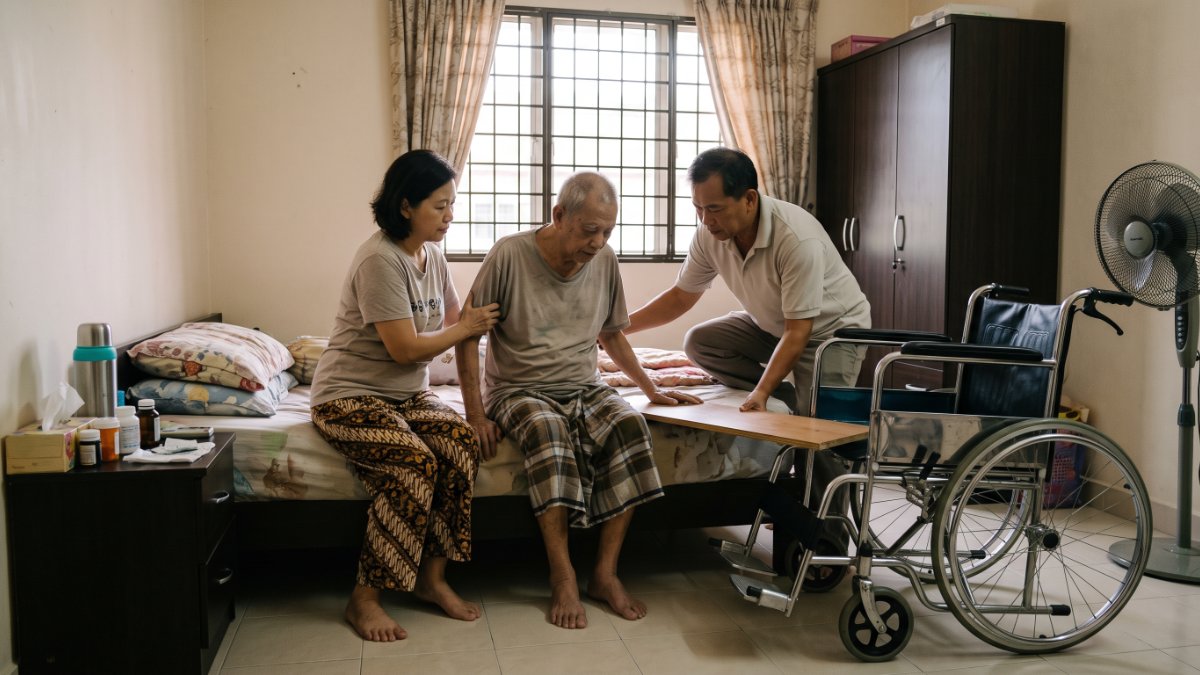
Choosing patient transfer equipment for home care starts with one question: which move are you trying to make easier? Moving a person from bed to chair is different from sliding them up the bed or helping them into a car. No single device solves every move. At Neolee Rehab Supply, we help families start with the exact task, the person’s abilities and the carers available.
A transfer is any move from one surface to another, such as bed to wheelchair. This guide shows how to match a transfer aid to each task. It is practical equipment information, not medical advice. If a move involves lifting, pain or sudden loss of balance, ask a physiotherapist or occupational therapist to assess it first.
Describe Each Transfer in One Sentence
Before you look at equipment, write each daily transfer as one simple sentence. Name where it starts, where it ends and which way the person moves.
For example:
- “From the bed to the wheelchair on the left side.”
- “From the wheelchair to the toilet.”
- “Up the bed after sliding down.”
- “From the wheelchair to the front seat of the car.”
Next, note what the person can do.
Can they sit upright without support? Can they stand for a moment or take weight through their legs? Can they follow instructions and use their arms to help? These answers decide which aids are worth considering at all.
Patient Transfer Equipment for Home Care: Three Common Aids
Our medical devices range includes transfer chairs, transfer boards and transfer sheets. Each is built for a different kind of move.
A transfer chair for repeated seated moves
A transfer chair helps when the person moves between seats several times a day. It can cut down on repeated lifting. Our Neo Multi Purpose Patient Transfer Chair 3.0 works as a transfer chair, a wheelchair and a commode. It is designed to reduce the risk of caregiver injury during transfers.
Before you choose one, measure the bed height, the toilet height and the narrowest door the chair must pass. Check the person’s weight against the product’s limit. Make sure every carer can work each lock and adjustment.
A transfer board for short sideways gaps
A transfer board makes a bridge between two seats that are close together and at a similar height. The person slides across it while seated. Our Neo Wing Transfer Board is a wing-shaped board made of high-strength polymer, with a 130kg weight capacity.
A transfer board is not a lifting device. The person usually needs fair sitting balance and the ability to help with the move. The carer needs to know where to place the board and how to protect the person’s skin.
A transfer sheet for moves in bed
A transfer sheet helps with sideways moves and repositioning in bed. Our Patient Transfer Sheet is a reinforced, multi-handle aid made of durable, low-friction nylon. Low friction means it slides easily, so the carer pulls less.
The handles spread the effort, but they do not make a heavy lift safe for one person. Use the number of carers the care team recommends for the task. Avoid pulling directly on fragile skin.
Match the Aid to the Move
Once your list is ready, match each move to an aid. A simple guide:
- Bed to wheelchair, person can sit well: a transfer board may suit.
- Several seated moves a day, including to the toilet: a transfer chair may reduce lifting.
- Moving up or across the bed: a transfer sheet may help.
- Person cannot sit or bear weight: ask a therapist before buying anything.
Some homes need two aids for different moves. That is normal. The aim is the right aid for each task, not one device for everything.
Check the Home Before You Buy
Equipment that suits the person can still fail in the wrong space. Walk through each transfer route and check:
- The height and width of each start and end surface.
- Door widths and tight corners on the way.
- Floors that may be wet or slippery, such as the bathroom.
- Where each aid will be stored so it is easy to reach.
Count how many carers are present at each time of day. A move that needs two people in the morning may not be possible in the evening if only one carer is home.
Car transfers need their own check. Car seats sit at different heights, and some doors do not open wide. Park on flat ground with space beside the open door. Move the car seat back before the transfer, and try the move once with the therapist before a real trip.
Protect the Carer as Well
Transfers are hard on the carer’s body too. Back strain often comes from bending, twisting and lifting at the same time. Raise the bed to a comfortable height before a move, if it can be raised. Keep your feet apart and turn with your feet, not your waist.
Never try to catch a falling person by lifting them. Lower them gently to the floor if you can, then call for help. A carer who is injured cannot help anyone the next day.
Agree One Method and Practise It
Even good equipment can be unsafe if the method changes from carer to carer. Common slips include forgetting the brakes or leaving a gap that is too wide. Agree on one clear method for each move with the therapist, then practise it while they watch.
Write the steps on a card and keep it near the bed. Helpers who come on weekends or at night should follow the same steps. Short videos on a phone can help too, if the therapist agrees.
Review the Plan When Things Change
The right equipment can change over time. A person may grow stronger after rehabilitation or weaker after an illness. A carer may develop back pain or move away.
Review the transfer plan when:
- The person needs more or less help than before.
- A near-fall or a painful move happens.
- The home layout or the bed changes.
- A carer finds a move hard to do safely.
Frequently Asked Questions
1. Is a transfer board a lifting device?
No. A transfer board bridges a short gap for a seated, sideways move. The person usually needs fair sitting balance to use it.
2. Can one carer use a patient transfer sheet alone?
It depends on the person, the task and the product instructions. Heavier or harder moves may need two or more trained carers.
3. What should I measure before buying a transfer chair?
Measure the bed and toilet heights, the narrowest door and the space needed to turn and position the chair.
4. Does transfer equipment replace carer training?
No. Carers still need one agreed method and must know how to use brakes, locks and safe body positions.
5. When should a professional assess a transfer?
Ask for an assessment when the person cannot bear weight, sits poorly, has pain or needs a lot of lifting help.

