
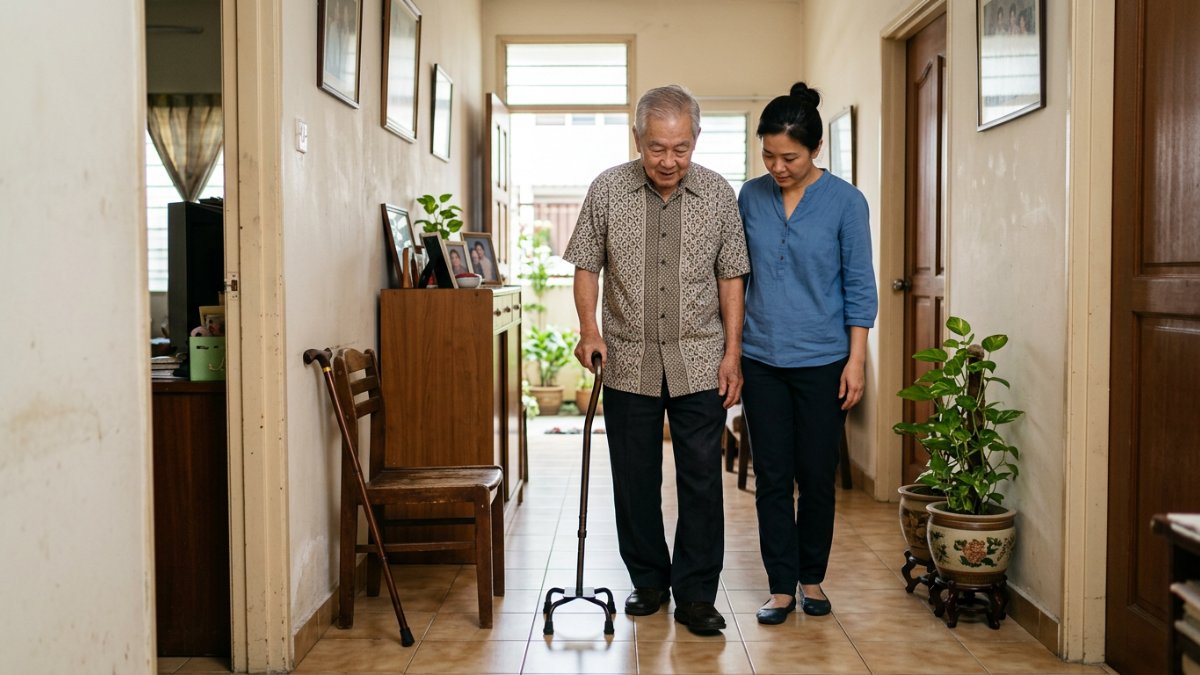
Choosing between a quad cane and a single-point cane is one of the first decisions many families face with walking aids. Both can support walking at home, but they suit different needs, floors and spaces. At Neolee Rehab Supply, our walking aids category shows the main types side by side before you narrow things down.
This article explains how each cane works, how to set the height and what to watch for around the house. It is general equipment information, not a treatment plan. Your physiotherapist is the best person to say which cane suits the user’s balance and strength.
Walking aids: two kinds of cane, two jobs
A single-point cane, often called a walking stick, has one rubber tip at the bottom. It is slim, light and easy to carry. It suits people who need a little extra balance but can mostly bear weight on both legs.
A quad cane has a small base with four feet, or points. This base can stand up on its own when the user lets go. It is designed to offer more stable support for people who lean on the cane more heavily.
Neither type is better in every case. Think of the single-point cane as a light helper and the quad cane as a firmer prop. The Canes and Crutches range shows both styles, so you can compare handles and bases before you buy.
What a four-point base gives you
The four feet of a quad cane spread its contact with the floor. This may give more steadiness when the user shifts weight onto it. Many people use one after a stroke, when one side of the body is weaker.
Because it stands upright, a quad cane is also easy to reach again. For example, the user can let go to open a cupboard and the cane will stay in place. This saves bending down to pick it up.
The Adjustable Quad Cane has a four-point base designed to support balance, stability and mobility. Its height can be adjusted to fit the user. Ask the physiotherapist whether a wide or narrow base suits the user’s gait, which means their walking pattern.
A quad cane does have trade-offs. It is heavier and needs all four feet flat on the floor to work as intended. On uneven ground, it can rock if only some of the feet touch down.
Why a single-point cane can be easier indoors
Malaysian homes often have narrow corridors, door sills and furniture close together. A slim walking stick fits through these spaces more easily. It also moves faster, so walking can feel more natural.
A single-point cane suits users who walk fairly well but feel unsteady at times. For instance, someone recovering from a minor knee problem may only need light support on bad days.
The Elderly Crutch Foldable Walking Stick is made of lightweight aluminium and folds into four sections. It has an ergonomic handle and an adjustable height. Folding helps when you want to keep it in a handbag or car between outings.
Remember that a folding stick is still a support aid. Check that each section clicks firmly into place before every use.
Setting the right height
A cane at the wrong height can make walking harder. Too tall, and the shoulder hunches up. Too short, and the user has to stoop forward.
To find a good starting height, ask the user to stand up straight in their usual shoes. Let both arms hang loosely at the sides. The top of the handle should line up with the crease of the wrist.
- When the user holds the handle, the elbow should bend slightly.
- Push the height button fully through its hole after each change.
- Check the height again if the user changes footwear.
- Ask the physiotherapist to confirm the setting at the next visit.
Most people hold the cane in the hand opposite the weaker leg. The cane and the weaker leg then move forward together. Your physiotherapist may advise a different pattern, so follow their guidance.
Floors, stairs and tight corners
Home mobility depends a lot on the floor surface. Wet bathroom tiles, polished floors and loose rugs can all be risky with any cane. Wipe up spills quickly and remove rugs that slide.
The rubber tip is the part that grips the floor. Look at it every week for cracks, smooth patches or wear on one side. Replace it once the grooves fade, since a worn tip may slip.
Stairs need special care. A quad cane is often too wide for a narrow step, and it can tip if one foot hangs over the edge. Ask the physiotherapist to show the user a safe method before trying stairs with any cane.
Some users tire quickly and want to sit down along the way. The AkiSeat Walking Stick is a 2-in-1 stick that turns into a tripod stool when you pull a trigger. It weighs 1.2kg and has a built-in LED light, which can be handy on a dim walk to the bathroom at night.
If the user feels dizzy, has pain or has a fall, stop walking. Get them seated and speak to a doctor or physiotherapist before they continue.
Questions to ask your physiotherapist
Bring the cane to the appointment so it can be checked. These questions can help you get clear advice about walking aids:
- Which type of cane suits the user’s balance right now?
- Which hand should hold the cane?
- Is the current height correct?
- How should the user manage stairs and kerbs?
- Are there signs that a walker may be needed instead?
Needs can change over time. A user may start with a quad cane and move to a walking stick as strength improves, or the other way round. Review the choice at each follow-up visit.
Keep a short note of how walking goes between visits. Write down near-falls, tired days and places in the house that feel tricky. Sharing these details helps the physiotherapist judge whether the current walking aids still fit the user’s routine.
Frequently Asked Questions
1. Which hand should hold the cane?
Most people hold it in the hand opposite the weaker or painful leg. Your physiotherapist will confirm what suits the user.
2. Can a quad cane be used on stairs?
It can be awkward, as the base may be wider than a narrow step. Ask the physiotherapist to teach a safe stair method before trying it.
3. How do I check the rubber tip?
Look for cracks, smooth patches and uneven wear each week. Replace the tip once its grooves fade or it starts to feel slippery.
4. Is a folding walking stick as sturdy as a fixed one?
A folding stick can give good support when every section is locked in place. Check the joints before each use and stop using it if any part feels loose.
5. When might a walker be better than a cane?
A walker may suit someone who needs support on both sides or leans heavily on a cane. Ask the physiotherapist to assess whether a change is needed.

