
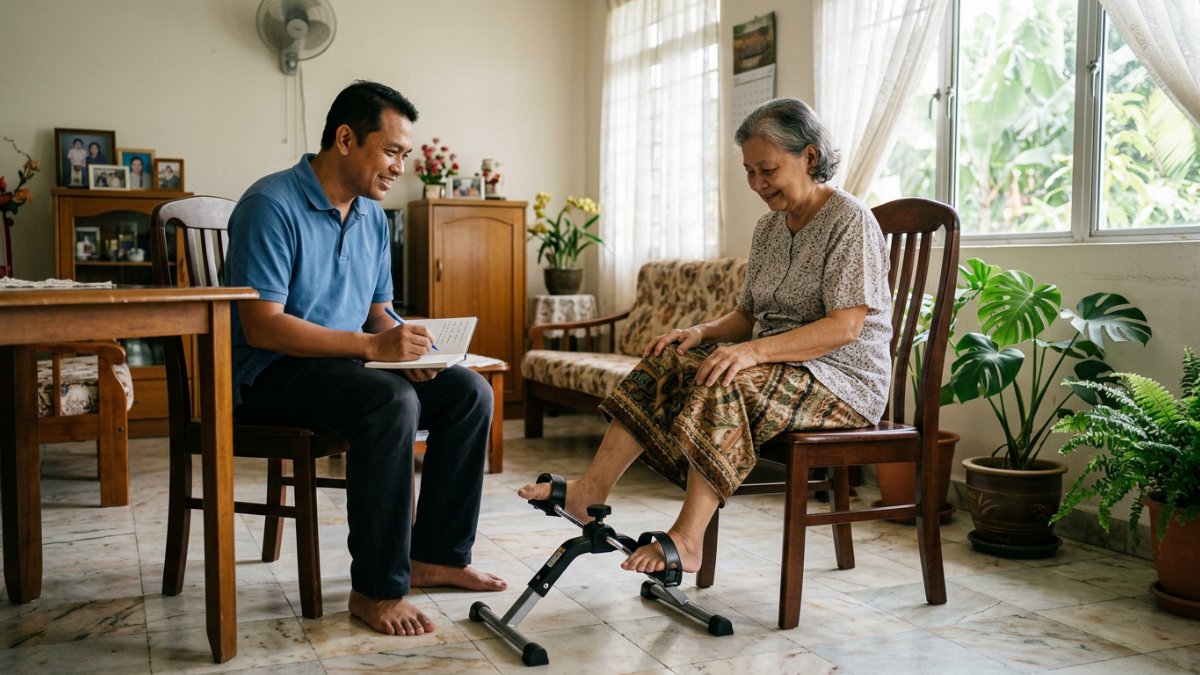
After a stroke, an operation or a long stay in hospital, many people go home with a list of exercises. Rehabilitation at home often means doing these moves on your own, day after day. The right equipment can make that routine easier to keep up. The wrong choice can gather dust or push you too hard.
This article explains how to match equipment to the plan your physiotherapist gave you. A physiotherapist is a health professional who helps people move and build strength after illness or injury. At Neolee Rehab Supply, our Rehabilitation range gives a sense of the options. Then bring your questions back to your physiotherapist before you decide.
Start rehabilitation with the plan, not the equipment
Your home rehab plan is the list of exercises your therapist set for you. It usually says which moves to do, how many times and how often. Some plans also say what to avoid. Read it again before you shop.
Ask yourself three simple questions:
- Which body part does each exercise target?
- Should I sit, stand or lie down for it?
- Does the plan mention any tool or machine by name?
If the plan says “pedal for five minutes, twice a day”, you know you need something to pedal. If it only lists stretches, you may not need any equipment yet. Buying first and asking later often leads to tools that do not match your needs.
When something is unclear, write it down. Call or message your physiotherapist and ask. It is better to wait a few days than to guess.
Why seated exercise suits many homes
Seated exercise means moving your arms or legs while sitting in a stable chair. You stay supported the whole time, so you do not need to balance on your feet. For many people early in recovery, this feels safer and less tiring.
It also fits small spaces. A Malaysian flat or terrace house may not have room for large gym machines. A chair, a clear patch of floor and one compact tool are often enough.
Seated work suits older adults, people with weak legs and those who tire quickly. It can also be done while a family member is nearby to help. Still, your therapist should confirm that sitting exercises are right for you.
How a pedal exerciser is used
A pedal exerciser is a small frame with two pedals, a bit like the bottom half of a bicycle. You sit in a chair and turn the pedals in circles. It may help keep joints moving and build gentle strength over time.
The Foldable Pedal Exerciser (Manual) is lightweight, portable and foldable. “Manual” means you move the pedals with your own effort, with no motor. It can be used for the lower limbs on the floor. You can also place it on a table and turn the pedals with your hands to work the upper limbs.
A gentle way to begin
Start slowly, at the pace and time your therapist set. Sit tall with your back against the chair. Place your feet on the pedals and turn them in smooth circles.
If you feel pain, dizziness or shortness of breath, stop at once. Rest and contact your physiotherapist or doctor before you try again. A little tiredness can be normal, but sharp pain is a warning sign.
Setting up the chair and the space
The chair matters as much as the exercise tool. Choose a sturdy chair with a firm seat and a straight back. Armrests can help you sit down and get up. Avoid chairs with wheels, soft sofas and stools without a backrest.
Check these points before each session:
- Your feet can rest flat on the floor or the pedals.
- Your knees bend at a comfortable angle, not squeezed up high.
- The chair does not slide when you push with your legs.
- The floor around you is free of rugs, cables and toys.
Put the chair against a wall if it tends to slip. Keep water and a phone within reach. If you use a walking aid, park it close by so you can stand up safely afterwards.
Good light also helps. Sit near a window or switch on a lamp so you can see your feet and the pedals clearly.
Keeping a simple exercise log
A log is a record of what you did each day. It can be a notebook, a calendar or a note on your phone. It helps you and your therapist see how things are going.
For each session, write down:
- the date and time
- which exercise you did and for how long
- how you felt during and after
- any pain, swelling or unusual tiredness
Bring the log to every follow-up visit. Your physiotherapist can use it to adjust your rehabilitation plan. Do not raise the time or effort on your own just because a session felt easy.
A family member can help fill in the log if writing is hard for you. Short notes are fine. Even “10 minutes, felt OK” is useful.
When standing practice belongs in a clinic
At some point, your plan may move on to standing and walking. This stage often needs closer supervision. A therapist can watch your balance, guide your feet and catch you if you wobble.
Clinics and therapy centres often use larger tools for this work. The Physical Therapy and Rehab Equipment section shows the kind of equipment found in these settings. Some of it needs space and trained staff to use well.
One example is the Adjustable Stainless Steel Parallel Bar (3 Metres). Parallel bars are two long rails set side by side. A person stands between them and holds on while practising steps. These bars are 3 metres long, adjustable and made of stainless steel.
Before you set up anything like this at home, ask your therapist. They can tell you whether your home has enough room. They can also judge whether you need someone beside you during every session.
Rehabilitation equipment works best as part of a plan, not in place of one. Keep your therapist involved at each step.
Frequently Asked Questions
1. Can a pedal exerciser be used for the arms?
Yes, the Foldable Pedal Exerciser can be used for upper or lower limbs. For arm work, place it securely on a stable table and follow your physiotherapist’s guidance.
2. How long should a seated exercise session last?
Follow the time set in your home rehab plan. If the plan does not say, ask your physiotherapist rather than guessing.
3. What kind of chair should I use for seated exercise?
Use a sturdy chair with a firm seat, a straight back and no wheels. Make sure it does not slide when you push with your legs.
4. When should I stop an exercise?
Stop straight away if you feel pain, dizziness, chest discomfort or breathlessness. Rest and contact your physiotherapist or doctor before you continue.
5. Can parallel bars be used at home?
Some people do use them at home, but they need space and often close supervision. Ask your therapist whether they suit your home and your stage of recovery.

