
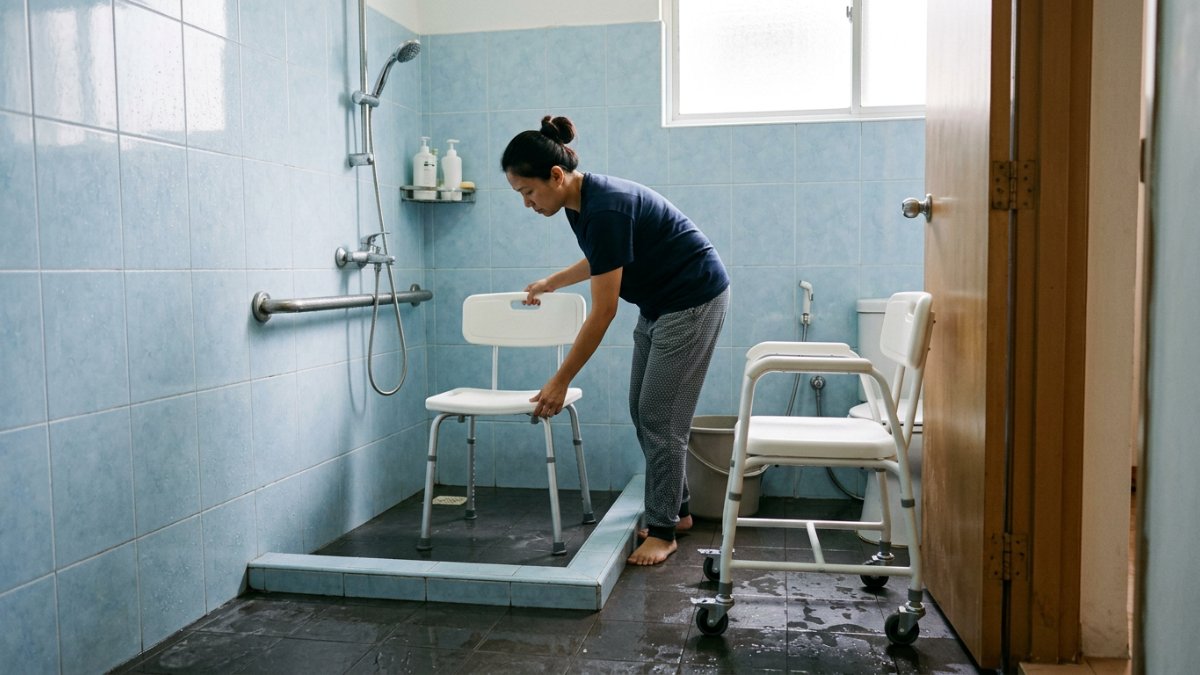
Many homes in Malaysia have a small bathroom with a wet floor, a narrow door and very little room to turn. When someone at home gets weaker or less steady, washing and using the toilet can become the hardest parts of the day. Good bathroom care starts with picking the right seat for the space you have. At Neolee Rehab Supply, our Bathroom Care range shows the main types side by side before you decide.
This guide compares a shower commode with a shower chair. It also covers measuring, grab rails and daily cleaning, so you can choose with more confidence.
The bathroom care difference in one sentence
A shower commode is a wheeled, open-seat chair for toileting and bathing, while a shower chair is a simple seat that stays put.
That one difference shapes everything else. A commode can carry the person from the bed to the bathroom and back. A shower chair has no wheels, so the person must walk or be helped to it. If you want to compare models with wheels and open seats, the Shower Commode Chairs section groups them in one place.
Measure the bathroom before you choose
A chair that does not fit through the door will not help anyone. Take a tape measure and spend ten minutes on these checks before you buy.
- Measure the width of the bathroom door when it is fully open.
- Check for a raised step or ledge at the doorway.
- Measure the floor space inside, from wall to wall.
- Note where the toilet, tap and shower head sit.
- Check how much room a carer has to stand beside the chair.
Write the numbers down and bring them when you compare products. For example, if the door gives you less room than the chair’s width, the chair cannot roll in. A raised ledge may also stop the wheels, even when the width is fine.
Think about the carer, too
Most bathroom help needs two people in the room: the user and the carer. The carer needs space to bend, hold and steady the person. If the room is very tight, a smaller seat may leave more space for safe helping.
When a shower commode makes more sense
A shower commode often suits someone who finds walking hard or tiring. The person sits once in the bedroom and is wheeled to the bathroom. This means fewer transfers. A transfer is any move from one seat or surface to another, such as from the bed to a chair.
The Beluga Chair 3-in-1 Shower Commode is one option to consider here. It has a lightweight, rust-proof aluminium frame, wheels and a 120kg weight capacity. A frame that does not rust matters in a room that stays wet most of the day.
Some families want one chair that does even more. The Shower Commode Aluminium Chair works as a commode, a shower chair and a wheelchair. It has a padded seat, castor wheels and a light aluminium frame. Castor wheels are small wheels that swivel, so the chair can turn in a tight space.
Signs a commode may suit your home
- The person needs help to stand or walk to the bathroom.
- Night-time toilet trips are hard or unsafe.
- The bathroom door is wide enough for a wheeled chair.
- You want to reduce the number of times the person stands up.
Always check with the relevant healthcare professional, such as a physiotherapist or occupational therapist. They can look at how the person moves and suggest what fits the care plan.
When a simple shower chair is enough
Some people can still walk short distances with little help. They may only need a seat so they do not stand while washing. For them, a basic shower chair may be enough.
A shower chair takes less space and is easy to move aside. It can work well in a small bathroom where a wheeled chair would block the toilet or the door. For example, an older parent who walks with a cane may manage the trip to the bathroom but tire under the shower.
Keep in mind that a shower chair does not help with getting to the bathroom. If walking becomes harder over time, review the choice. Needs often change, and the right seat today may not be right in six months.
Grab rails and the route to the toilet
A grab rail is a strong bar fixed near the toilet or shower that a person holds for support. It can help with sitting down, standing up and turning. Rails work best when placed where the hand naturally reaches.
The U-Shape Folding Bathroom Handrail is designed for tight spaces beside the toilet. It flips up 90 degrees, so it can fold out of the way when not in use. It comes in 60cm or 75cm sizes, has a glow-in-the-dark handle and is made of rust-proof stainless steel. It has a 150kg weight capacity.
Plan the whole route
Walk the path from the bed to the toilet at night with the lights low. Look for loose mats, wet patches and things that stick out. A glowing handle may help someone find the rail in the dark.
Fit rails following the product instructions and use proper wall fixings. If you are not sure the wall can hold the load, ask a qualified installer.
Drying, cleaning and storing the chair
A wet chair left in a damp bathroom can grow mould and smell. Simple daily habits keep the chair cleaner and easier to use.
- Rinse the seat and frame after each shower.
- Wipe it dry with a clean towel.
- Empty and wash the commode bucket after each use.
- Check the wheels and brakes once a week.
- Store the chair in a dry, airy spot when you can.
Follow the cleaning steps in the product manual. Some cleaning products may damage padding or plastic parts. If a brake slips or a part wobbles, stop using the chair until it is checked.
Good bathroom care also means watching the person, not just the equipment. If they show pain, dizziness, breathlessness, new skin damage or have a fall, stop and get professional advice.
Frequently Asked Questions
1. Can a shower commode go over a normal toilet?
Many shower commodes are designed to roll over a standard toilet, but heights and widths differ. Measure your toilet and compare it with the chair details before you buy.
2. How wide should the bathroom door be for a commode?
The door must be wider than the chair, with a little extra room for your hands on the frame. Measure the door fully open and check for a step at the entrance.
3. Are wheels safe on a wet bathroom floor?
Wheels can move on a wet floor, so always lock the brakes before the person sits, stands or washes. Stay close and keep one hand ready to steady the chair.
4. How do I clean a commode bucket?
Empty it into the toilet straight after use and rinse it with water. Then wash it with a mild cleaner as advised in the product instructions and let it dry.
5. Does a grab rail need drilling into the wall?
Most fixed grab rails are fitted with screws into the wall for a firm hold. Follow the product instructions and ask a qualified installer if you are unsure about your wall.

