
Moving house or travelling with medical devices takes more planning than packing a normal suitcase. Some items must stay with the person on the trip, and others need checking as soon as you arrive. A simple plan helps care continue smoothly in the new place.
At Neolee Rehab Supply, families often ask us how to move care equipment between homes. Our Medical Devices range mainly covers patient transfer and handling aids, plus a portable suction pump. These are the kinds of items this guide talks about.
This guide covers balik kampung trips, moving house and stays with family. It explains what to pack, how to think about power and how to set up at the other end. It is practical equipment information, not medical advice. Always follow each product’s instructions and the care plan from your healthcare team.
Plan your medical devices before the trip
Start by listing every item the person uses in a normal day. Then sort the list into three groups:
- Items needed during the trip itself.
- Items needed on the first night at the new place.
- Items that can travel later with the rest of the move.
This sorting stops you from packing something important at the bottom of a box. It also shows you which items need their own space in the car.
Plan rest stops
Long drives are tiring for someone who sits in one position. Plan stops every couple of hours, at places with accessible toilets if possible. Use each stop to help the person shift position, stretch gently and drink some water.
Check the equipment at each stop as well. Make sure nothing has slid loose in the boot or been squashed under bags. A quick look now can save a problem on arrival.
Keep the paperwork with you
Bring the user guides, the care plan and the contact numbers for the supplier and the care team. Keep them in one folder in your hand luggage. If something goes wrong in a new town, you will have what you need.
Devices that travel with the person
Some equipment needs to stay close to the person during the trip. For example, a person who needs airway care may need their suction pump within reach.
Our Portable Phlegm Suction Pump weighs 3.6kg and has a built-in carrying handle. It also has overflow protection, which helps stop liquid from reaching the motor. Pack its tubing, collection jar and spare parts in one bag, so nothing gets separated.
Only people trained by the healthcare team should use a suction pump. Before a long trip, ask the care team what to do if suction is needed on the road.
Flying with medical devices
Airlines have their own rules for medical devices in the cabin. Contact the airline well before you fly and ask what they need from you. Some airlines ask for a doctor’s letter or advance notice.
Getting in and out of the car
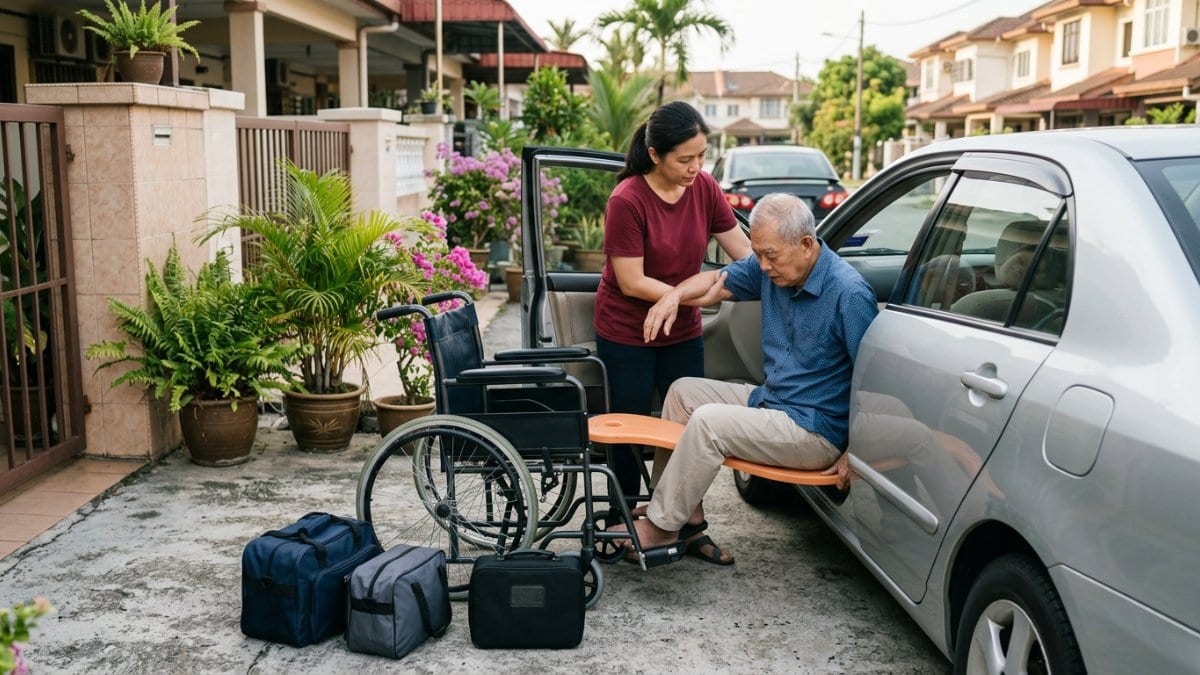
Transfers into and out of a car are often the hardest part of any trip. The car seat is usually lower or higher than the wheelchair, and the door limits space. Plan each transfer before you set off.
Our Neo Wing Transfer Board is designed for transfers between beds, wheelchairs, chairs and vehicles. It has a 130kg weight capacity, a curved wing shape and integrated hand grips for carrying. Practise using it at home first, with guidance from the therapist if possible.
Repositioning at the other end
A long drive can leave the person stiff and in need of a change of position. Our Patient Transfer Sheet has multiple handles and a low-friction underside for lateral transfers and repositioning. It is foldable, so it packs flat in a travel bag.
Power, plugs and charging
Any device that runs on electricity needs a plan for power. Check each user guide for its power needs before you go. Then think about where you will plug in at the new place.
A few checks help:
- Ask your host which sockets are near the room the person will use.
- Bring any chargers and cables in your hand luggage, not in a moving box.
- Avoid long chains of extension leads, which can overheat.
- Know what you will do if the power goes out on the first night.
If a device stops working while you are away, call the supplier before trying any repairs.
Moving house with larger items
When you move house for good, larger equipment needs extra care. Measure the doorways, the corridor and the bathroom at the new home before moving day.
Our Neo Multi Purpose Patient Transfer Chair 3.0 is one example of a larger item. It combines a transfer chair, wheelchair and commode, with an overall width of 55cm and lockable wheels. Measuring before the move tells you which rooms it can reach in the new layout.
Ask the movers to carry large items carefully and to keep them upright where the user guide says so. Wrap delicate parts, such as armrests or footplates, in towels or bubble wrap.
Set up the care room first
On moving day, set up the person’s room before you unpack anything else. Put the bed, the main devices and the night supplies in place. That way, the first night feels as normal as possible for the person.
Checking everything after you arrive
Moving can knock, bend or loosen equipment. Check each item before the person uses it again.
Look for loose screws, cracked parts and worn straps. Clean surfaces that may have collected dust on the way, following each user guide. Test any electric device before you rely on it.
Give the person time to settle too. A new room, new sounds and a different bed can feel strange for the first few nights. Keep familiar items nearby, such as their own pillow, blanket or photos.
Write a short note of what you checked. If anything is damaged, set it aside and contact the supplier. Do not use a device that seems unsafe, even for one night.
Frequently Asked Questions
1. What should travel with the person and not in the moving van?
Keep any device needed during the trip or on the first night with you. This includes chargers, tubing, spare parts and user guides.
2. Can I take a suction pump on a plane?
Each airline has its own rules for medical devices. Contact the airline well before you fly and ask what they need from you.
3. How do I make car transfers easier on a long trip?
Plan each transfer before you set off and practise at home first. A transfer board may help, used with guidance from the therapist.
4. What should I check after moving equipment?
Look for loose screws, cracked parts and worn straps, and test electric devices before use. Set aside anything that seems damaged and call the supplier.
5. Should I set up the care room first when moving house?
Yes. Setting up the bed, devices and night supplies first helps the person settle on the first night.

