
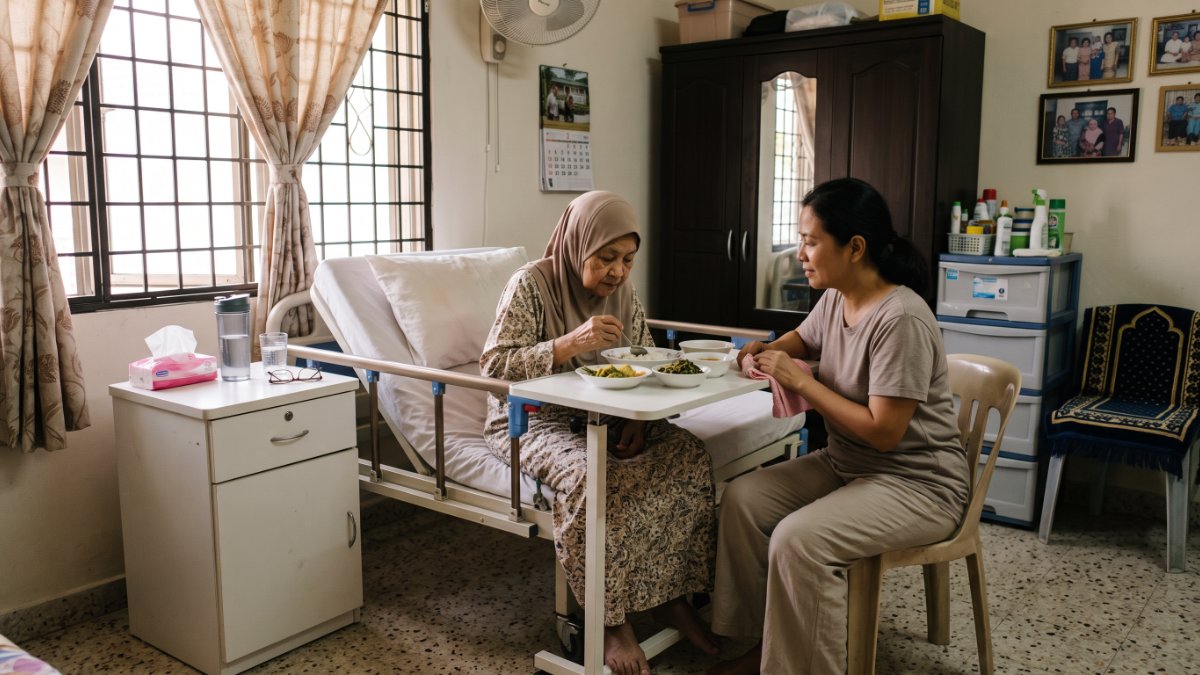
Overbed table vs bedside cabinet is a common choice when space beside a care bed is tight. The two pieces solve different problems. An overbed table brings a work surface over or beside the bed. A bedside cabinet keeps everyday items organised and within reach.
At Neolee Rehab Supply, we help families decide which one they need first, and whether they need both.
This guide explains what each piece does, the types available and how to plan a bedside area around a real care routine. It is practical home information, not medical advice. In a small room, the wrong piece can block care, transfers or the way to the door, so plan before you buy.
What Each Piece Is For
Our hospital furniture range includes overbed tables, bedside cabinets and privacy screens. Before you choose, list what happens at the bed during a normal day.
An overbed table helps with activities. The person can eat, read, write or use a tablet while sitting up in bed.
A bedside cabinet helps with storage. It keeps tissues, a water cup, glasses, personal items and care supplies close by.
If most of your list is about doing things in bed, start with a table. If most of it is about finding things, start with a cabinet.
Overbed Table vs Bedside Cabinet: Two Kinds of Table
There are two main kinds of overbed table. Each suits a different bed and room.
A table that rests on the side rails
Some tables sit across the bed’s side rails and need no floor space at all. Our Easy Over Bed Table is a portable tabletop made of durable ABS plastic. It weighs 2.2kg and is designed to sit across hospital bed side rails.
This saves floor space, which helps in small rooms. The table must fit the bed, though. Check the width between the rails and the shape of the rails before you buy. Make sure the person or carer can lift it on and off comfortably.
A table on wheels
Other tables stand on the floor and slide under the bed. Our Overbed Table With Wheels has a laminated wood surface and a steel frame. Its height adjusts from 75cm to 99cm, and it has a 30kg load capacity.
A wheeled table works with many beds and can be moved away when not needed. It does need clear floor space under and beside the bed. Lock its wheels before the person leans on it to eat or write. Remind visitors that it is not a support for standing up.
A Bedside Cabinet for Organised Storage
A bedside cabinet keeps items off the mattress and the floor. Our Hospital Bedside Cabinet is made of ABS plastic and has a top drawer, a large bottom cabinet and a slide-out tray. It is designed to match standard hospital beds, with a 45kg load capacity.
The slide-out tray gives a small surface for a cup or a book. For some people, this is enough, and a separate table is not needed.
Decide which items truly belong beside the bed. A cabinet should not become a store for spare medicines, loose cables or equipment that needs air around it.
Sort Items Into Simple Groups
A cabinet works best when everyone knows where things go. Use a few clear groups:
- Top drawer: daily items such as glasses, tissues and the phone charger.
- Tray: the water cup and anything used many times a day.
- Bottom cabinet: spare pads, wipes and clean linen.
- Separate lined bin: used items, away from food and drinks.
Keep emergency contact numbers somewhere easy to see. Put heavy items low to keep the cabinet steady.
Protect the Carer’s Working Space
Furniture should not force the carer to twist, reach over the person or move things before every task. Leave room for the side rails, wheelchair transfers, changing sheets and any mobility aid.
Keep at least one side of the bed clear. If the person always gets out on one side, do not place fixed furniture there.
Try a full morning routine before you settle the layout. Check that drawers open while the carer stands beside the bed. Check that the table can move without hitting other equipment.
Think About the Person’s Independence
The right furniture can help the person do more for themselves. A table at the correct height lets them eat without help. A cabinet within easy reach lets them find their own glasses or phone.
Ask the person what they would like to reach on their own. Then place those items on the side of their stronger hand. Small changes like this can lift their mood and save the carer many trips each day.
Check the reach while the person sits up in bed. If they have to stretch or lean over the edge, move the furniture closer or lower the items.
Do You Need Both?
Many homes end up with both pieces, but not always at once. Ask:
- Does the person eat most meals in bed? A table helps.
- Do items pile up on the mattress or floor? A cabinet helps.
- Is the room very small? A rail-mounted table plus a cabinet may fit where a wheeled table cannot.
- Does the person sit out of bed for meals? A cabinet with a tray may be enough.
Start with the piece that solves the biggest daily problem. Add the second one only if a real need appears.
Keep Surfaces Easy to Clean
Food, drinks and personal-care products spill easily. Smooth, wipeable surfaces make cleaning quicker. Wipe the table before and after meals, and the cabinet top once a day.
Check joints, wheels and drawer runners for dust or sticky spills. Follow the cleaning instructions for each product, because strong chemicals can damage finishes and moving parts.
A Simple Planning Order
- Place the bed and confirm which side transfers happen from.
- Mark the carer’s working space.
- Choose the surface needed for meals or activities.
- Add only the storage needed for daily items.
- Keep the floor and the route to the door clear.
- Live with the layout for a few days before adding more.
Frequently Asked Questions
1. What is an overbed table used for?
It gives a surface within reach for meals, reading, writing and other light activities while the person is in bed.
2. Does a rail-mounted overbed table fit every hospital bed?
No. Check the width between the rails, the rail shape and the table size before you buy.
3. What should go in a bedside cabinet?
Keep organised daily items there. Store medicines and medical supplies as the care team advises.
4. Where should bedside furniture go?
Place it where it does not block transfers, side rails, the carer’s space, doors or the way out of the room.
5. Do I need both an overbed table and a bedside cabinet?
Not always. Start with the piece that solves the biggest daily problem, then add the other if a real need appears.

