
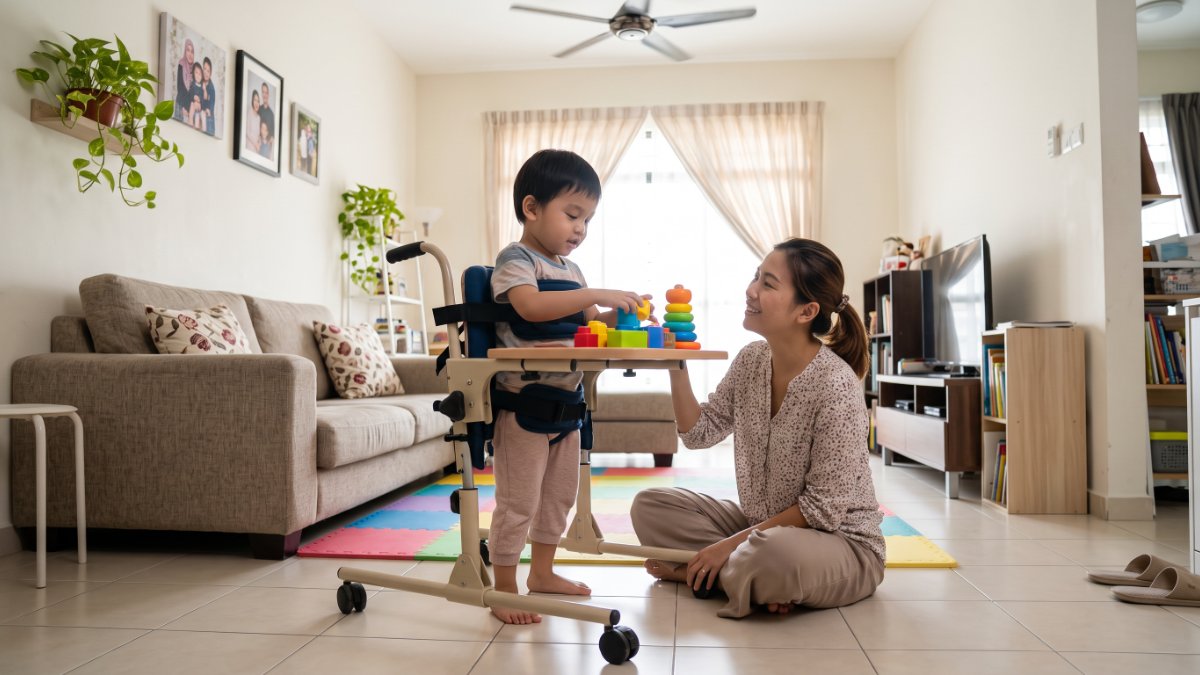
Prone vs supine standing frame is one of the first questions parents ask when a therapist suggests standing practice. A standing frame holds a child upright, or partly upright, when standing alone is hard. Prone, supine and sit-to-stand frames each support the child in a different way. At Neolee Rehab Supply, we help families understand these differences before they talk the choice through with the child’s therapist.
This guide explains how each type works, what affects fit and how to fit standing into a busy family day. It gives practical equipment information, not medical advice. A physiotherapist, occupational therapist or rehabilitation doctor should choose the frame, the angle and how long the child stands each day.
What a Standing Frame Does
A standing frame lets a child spend time upright with support at the body parts that need it. These often include the chest, hips, knees and feet. Standing can let a child see the world at eye level, play at a table or join activities with others.
Our children’s product range includes standing, sitting, bathing and mobility equipment. You can compare the frames side by side in our standing frames section.
Choosing between frame types by age or diagnosis alone does not work well. Two children of the same age can need very different support. The therapist looks at how the child holds their head and trunk, how their hips and knees move and how they cope with standing.
Prone vs Supine Standing Frame: The Main Difference
The words prone and supine describe which way the child faces when the frame supports them.
A prone frame supports from the front
In a prone frame, the child leans slightly forward. Pads at the front of the body, such as the chest and knees, hold them in place. Because the child faces forward and slightly down, a tray in front can be used for play or schoolwork.
Prone frames often suit children who have some head and trunk control. Our Joyride Child Prone Standing Frame is suitable for children between 90cm and 130cm tall. The therapist decides the angle and how long each session should last.
A supine frame supports from behind
In a supine frame, the child lies on their back against the frame. The frame then tilts slowly from lying towards upright. This gives more support for the head and trunk.
Supine frames often suit children who need more head support or a slower move to standing. Our Joyride Child CP Supine Standing Frame is designed for children with cerebral palsy, spinal muscular atrophy and other neuromuscular conditions. It provides gradual support as the child moves from lying to upright.
A Sit-to-Stand Frame Does Two Jobs
A sit-to-stand frame supports a child in sitting and in standing, and in the move between them. The child can take part in therapy or activities without being lifted into a separate frame for each position.
Our Joyride Child Sit To Stand Standing Frame supports children with cerebral palsy in both sitting and standing positions. Because it works in two positions, check the child’s measurements in both. Overall height alone is not enough.
Questions to Ask the Therapist
Bring a short list to the next session, and write the answers down:
- Which type of frame suits my child now, and why?
- What angle should the frame be set at?
- How long should each standing session last, and how often?
- Which shoes, splints or clothing should my child wear in it?
- Which signs mean we should stop and call you?
- When will we review the frame and its settings?
Share the answers with everyone who cares for your child, including grandparents and school staff.
Fit Involves More Than Height
The therapist may check several things before setting up a frame:
- Head control and trunk steadiness.
- How far the hips and knees can move.
- Foot position and whether splints are worn.
- Muscle tone, which means how tight or floppy the muscles are.
- The skin, and how the child copes with taking weight on their legs.
Supports should hold the child in line without pressing hard on the skin. Clothing, shoes and splints can change the fit. Use the set-up the therapist approves, and do not change straps or angles just to suit a different outfit.
Children grow, so the frame needs regular adjustment. Marking an old setting is a useful start, but the therapist should confirm the fit at each review.
Prepare the Home for Standing Time
A frame needs its own safe space. Before the first session at home:
- Measure the frame in its working position and check the floor space.
- Choose a level area away from steps and loose rugs.
- Plan how the child will get into and out of the frame.
- Keep the standing schedule where every carer can see it.
- Check straps, cushions, wheels and brakes before each session.
Stop the session and ask for advice if the child shows pain, distress, colour changes or red marks on the skin.
Make Standing Part of the Day
Standing is easier to keep up when it fits into normal life. Some families use standing time for meals, homework or a favourite game. Others place the frame where the child can watch brothers and sisters play.
Keep each session within the time the therapist sets. Longer is not always better. If the child becomes tired or upset, end the session calmly and try again later.
Look After the Frame
A frame used every day needs simple care. Wipe the pads and tray after use, especially after meals. Check that straps are not frayed and that buckles close firmly.
Look at the wheels and brakes once a week, and remove any hair or threads caught in them. If a part is worn or broken, stop using the frame and contact us for a replacement part.
Standing Is One Part of the Programme
A standing frame does not replace therapy, active movement, seating or mobility equipment. The therapist should explain how standing fits with school, play, rest and other exercises.
Ask which changes to expect over time and which warning signs need an earlier review. This turns the frame into a planned part of care, not a one-off purchase.
Frequently Asked Questions
1. What is a prone standing frame?
It supports a child in a forward-leaning standing position, with pads at the front of the body such as the chest and knees.
2. What is a supine standing frame?
It supports the child from behind and tilts slowly from lying towards upright. It gives more head and trunk support.
3. What is a sit-to-stand frame?
It supports a child in both sitting and standing, and in the move between the two positions.
4. Can parents choose a standing frame by the child’s age?
No. The choice depends on the child’s measurements, posture, movement, medical needs and therapy goals.
5. How often should a child’s standing frame be reviewed?
Review it regularly, and whenever the child grows, seems uncomfortable or the therapist changes the standing plan.

