
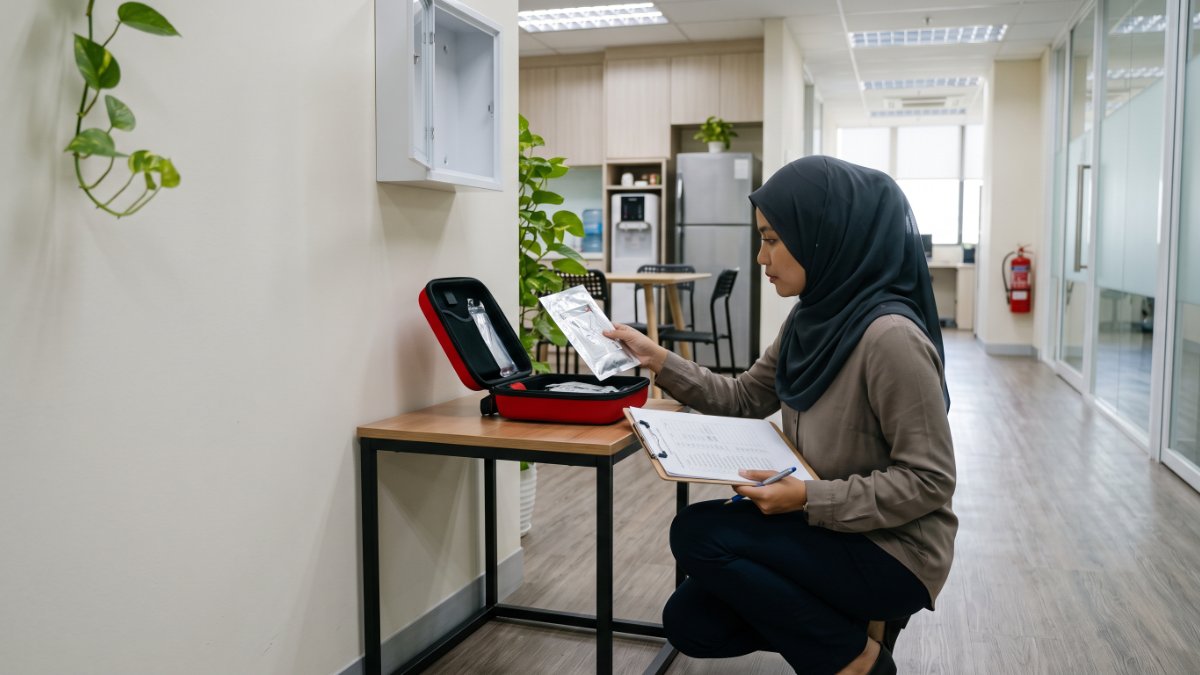
Workplace AED readiness means the device will work the moment someone needs it. Buying an AED is only the first step. Someone must check it, replace pads and batteries before they expire, train staff and restore the device after any use. At Neolee Rehab Supply, we see many workplaces with a well-placed AED but no clear owner for these jobs.
An AED, or automated external defibrillator, is a portable device that can deliver a shock when the heart stops beating normally. This guide covers the device’s working life. It explains who looks after it, how to manage pads and batteries, which training equipment you need and what to do after use. Follow the current rules and guidance that apply to your organisation.
Give Workplace AED Readiness a Named Owner
An AED with no owner slowly drifts out of date. Name one person or team to look after it. Name a deputy for leave, sick days and shift changes.
The owner should keep these details in one place:
- The AED model and serial number.
- Warranty information and the supplier’s contact details.
- The expiry dates of the pads and battery fitted now.
- Where spare pads and batteries are stored.
This one page saves time when something needs replacing. It also helps a new owner take over smoothly.
Know the Device You Have
Different AED models show their status in different ways. Some use a light, others a symbol or a short beep. The owner must know what “ready” looks like on your model.
Our Emergency & First Aid range includes AEDs, replacement pads, batteries and training equipment. One example is the Mindray BeneHeart C1A Semi-Automatic AED. It is a semi-automatic AED with rescue guidance for the user. Semi-automatic means the device advises when a shock is needed, and a person presses the button to give it.
Read the manual’s section on self-tests and status checks. Then write the key points on the inspection sheet, so any deputy can follow them.
Keep the manual in a clear folder near the AED or in the owner’s office. Note the maker’s helpline and our contact details on the front. When a warning appears that nobody recognises, the answer is then only a minute away.
Check Access, Signs and Storage
An AED is only useful if people can reach it quickly. Walk the route from the busiest parts of your building to the AED. Look for anything that could slow someone down, such as a locked door, a new partition or boxes in a corridor.
Make sure clear signs point to the AED from main walkways. Visitors and new staff should be able to find it without asking.
Heat matters in Malaysia. Many AEDs, pads and batteries have a storage temperature range in their manual. Keep the AED out of direct sun and away from hot windows. Never leave it in a parked car for long periods.
Pads Have Their Own Expiry Date
AED pads are the sticky pads placed on the chest. They carry the shock from the device to the person. Pads have a use-by date, and their packaging must stay sealed until an emergency.
Only use pads made for your AED model. For Mindray BeneHeart AEDs, the matching pads are the Mindray BeneHeart Adult/Paediatric Multifunction Electrode Disposable Pads (MR62). These are disposable, so a used set must always be replaced.
Order new pads well before the old ones expire. If you start buying on the expiry date, the AED may sit without valid pads while stock arrives. Keep one spare set if your organisation’s plan allows.
Batteries Need Planning Too
The battery powers both the shock and the AED’s regular self-checks. Batteries may need replacing by a date, by a low-battery warning or after a set number of uses. Check the manual for your model.
For the Mindray BeneHeart C1A and C2, the matching battery is the Mindray Lithium Battery (LM34S002A). It is a disposable lithium battery made for these two AEDs. Do not fit a battery from another model, even if it looks similar.
Add the battery’s date to the same calendar as the pads. Then one reminder covers both.
Choose the Right Training Equipment
Staff need to practise, but not with the live AED. Repeatedly opening the live unit can waste pads and battery power. Training equipment lets people practise as often as they need.
A training setup usually includes:
- An AED trainer that copies the voice prompts of a real device.
- Training pads made for the trainer, which can be reused.
- A CPR manikin for chest compression practice.
Our Prestan Professional AED Trainer Plus is made for practice only and cannot deliver a shock. Keep trainer pads and parts with the trainer, never with the live AED.
Plan refresher practice rather than relying on one course. People forget the order of steps when months pass without practice. A short session every few months, using the trainer, keeps the steps familiar. Include new staff in the next session after they join, so nobody is left out.
Keep a Short Inspection Record
A simple sheet beside the AED shows that checks really happen. It also helps the owner spot a missed week. Record:
- The date and the name of the person checking.
- The status indicator and the condition of the device.
- The pad packaging and its expiry date.
- The battery status or its replacement date.
- The cabinet, signage and access route.
- Any problem found, who will fix it and by when.
Follow the check schedule set by your organisation and the maker’s instructions.
After Use, Return the AED to Service
Once an emergency is over, the AED is not ready again until it is restored. Replace the used pads straight away. Check the battery status and follow the maker’s steps after use.
Hold a short, calm review with the people involved. Ask what slowed the response and what worked well. Do not look for blame. Update the plan, then tell staff when the AED is back in service.
Frequently Asked Questions
1. How often should a workplace AED be checked?
Follow the maker’s instructions and your organisation’s schedule. Each check should cover the status indicator, the pads and the battery.
2. Can expired AED pads stay with the device as a backup?
No. Replace expired pads as the maker instructs. Do not rely on them as ready equipment.
3. Should staff practise with the live AED?
Routine practice should use an AED trainer. This keeps the live device and its pads ready for a real emergency.
4. Who should be responsible for AED readiness?
Name one person or team, plus a deputy. They manage checks, replacements, records and follow-up after use.
5. What should happen after an AED is used?
Replace the used pads, check the battery and follow the maker’s steps. Then review the response and tell staff when the AED is ready again.

