
介绍
Caring for elderly parents at home is one of the most meaningful responsibilities a family can take on. It allows your loved ones to remain in a familiar environment, surrounded by family, comfort, and daily routines. However, as seniors age or recover from illness, surgery, stroke, or injury, the home may need to be adjusted to support their changing needs.
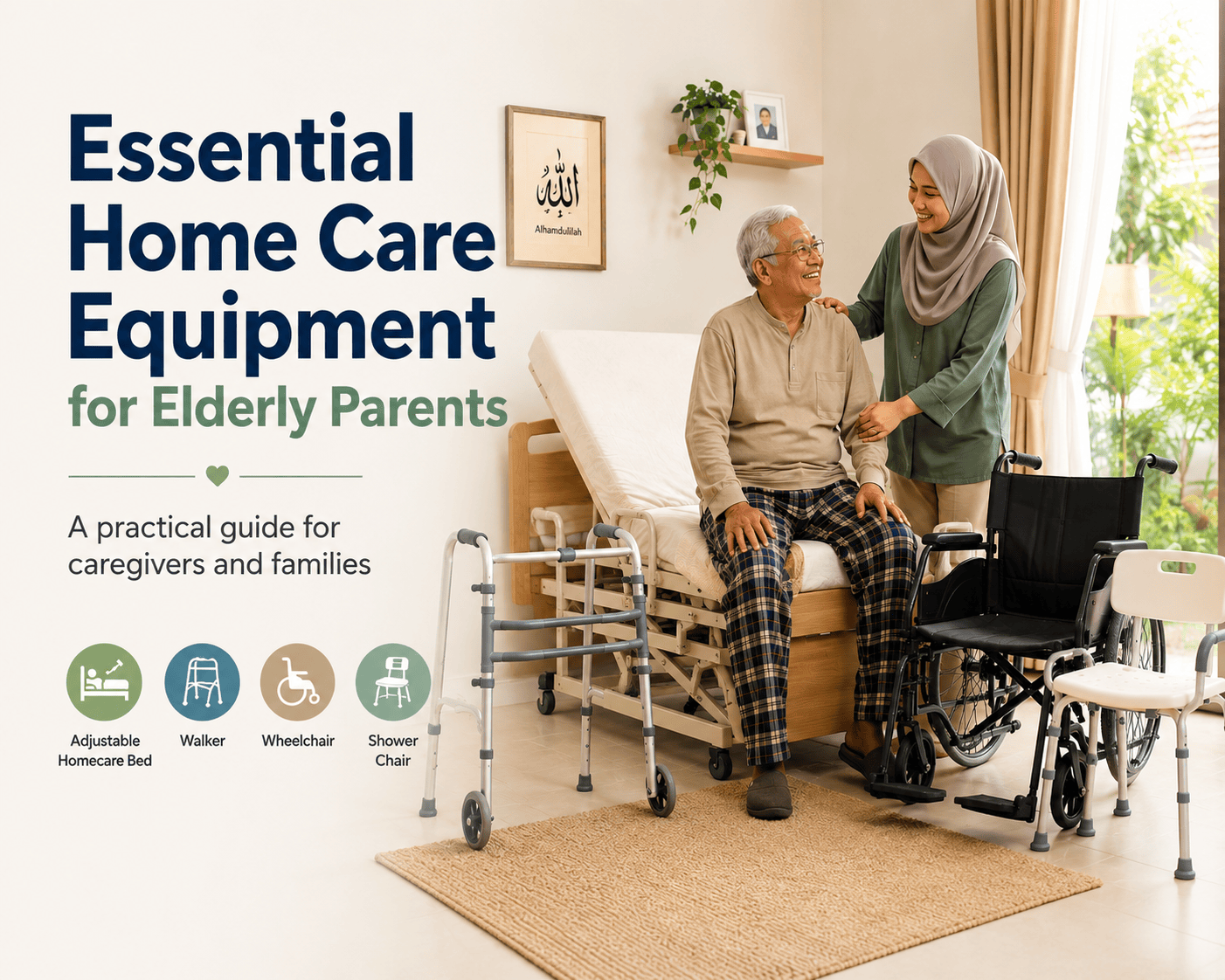
Choosing the right home care equipment for elderly parents can make daily life safer, easier, and more comfortable. The right tools can help prevent falls, improve mobility, reduce caregiver strain, and support rehabilitation at home. For families in Malaysia, having access to reliable elderly care products Malaysia caregivers can trust is especially important when planning long-term care.
This guide explains the essential home care equipment every family should consider, along with practical tips and product recommendations to help you create a safer home environment for your elderly loved one.
Why Home Care Equipment Is Important for Elderly Parents
Many elderly people face challenges such as reduced balance, weak muscles, joint pain, limited mobility, or difficulty standing and walking. Some may also need additional support after surgery, stroke, or prolonged hospitalisation.
Proper senior safety equipment helps reduce common risks at home, especially falls. Falls are one of the biggest concerns for elderly users because they can lead to fractures, loss of confidence, or longer recovery times. With the right equipment, seniors can move more safely and maintain a sense of independence.
Home care equipment can also help caregivers. Lifting, transferring, bathing, and assisting an elderly parent can be physically demanding. Good caregiving essentials reduce strain and make daily care more manageable for family members and professional caregivers.
1. Mobility Aids for Daily Movement
Mobility aids are among the most important types of home care equipment for elderly users. They help seniors move around the home, go outdoors, and perform daily activities with greater confidence.
Common mobility aids include:
- Walking canes: Suitable for elderly users who need light balance support.
- Walking frames: Provide stronger stability for seniors with weaker legs or balance problems.
- Rollators: Wheeled walkers with brakes, often suitable for users who can walk but need support and rest breaks.
- Wheelchairs: Useful for seniors with limited walking ability, fatigue, or long-distance mobility needs.
- Commode wheelchairs: Helpful for users who need toileting support and easier transfers.
When choosing a mobility aid, consider the user’s strength, balance, home layout, and whether they need indoor or outdoor support. For Malaysian homes with narrow spaces, compact and foldable options may be more practical.

2. Bathroom Safety Equipment
The bathroom is one of the most dangerous areas in the home for elderly people. Wet floors, slippery tiles, and low toilet seats can increase the risk of falls. Bathroom safety products are essential senior safety equipment for elderly parents.
Important bathroom aids include:
- Shower chairs: Allow seniors to bathe while seated, reducing fatigue and fall risk.
- Grab bars: Provide stable support near the toilet, shower, or bathroom entrance.
- Raised toilet seats: Make sitting and standing easier for users with knee, hip, or back pain.
- Anti-slip mats: Help reduce slipping on wet bathroom floors.
- Commode chairs: Useful for seniors who have difficulty walking to the bathroom, especially at night.
For extra safety, keep toiletries within easy reach and ensure the bathroom is well lit. Families should also avoid placing loose mats or clutter near the bathroom entrance.
3. Hospital Beds and Bedroom Care Equipment
For elderly parents who spend long hours in bed or need assistance with positioning, a hospital bed can make home care much easier. A hospital bed is especially helpful for seniors recovering from surgery, stroke, or serious illness.
Benefits of hospital beds include:
- Adjustable head and leg positions
- Easier feeding, resting, and breathing support
- Better caregiver access during care routines
- Safer transfers from bed to wheelchair
- Reduced risk of pressure injuries when used with the right mattress
Electric hospital beds are convenient because caregivers can adjust the bed height and position with less physical effort. Bed rails may also help prevent accidental rolling or falling, but they should be used correctly and safely.
Useful bedroom care accessories include pressure relief mattresses, overbed tables, waterproof mattress protectors, and bedside commodes. These caregiving essentials support comfort, hygiene, and safety.

4. Transfer and Lifting Aids
Moving an elderly parent from the bed to a wheelchair, toilet, or chair can be difficult. Without the right technique or equipment, both the senior and caregiver may be at risk of injury.
Transfer aids can include:
- Transfer belts: Help caregivers support seniors while standing or walking.
- Transfer boards: Assist users in sliding safely from one surface to another.
- Patient hoists: Suitable for users with very limited mobility who require lifting support.
- Standing aids: Help seniors move from sitting to standing with added support.
These products are especially useful for stroke patients, elderly users with weak legs, and rehab patients who are slowly rebuilding strength. Choosing the right transfer aid depends on the user’s weight, ability to participate, and caregiver strength.
5. Rehabilitation Equipment for Recovery and Strength
Rehabilitation is important for elderly users who are recovering from illness, injury, or surgery. The right rehabilitation equipment can help improve strength, posture, flexibility, and confidence.
Common rehab equipment includes:
- Standing frames: Support upright positioning for users who cannot stand independently.
- Pedal exercisers: Allow gentle arm or leg exercise while seated.
- Resistance bands: Help with simple strengthening exercises.
- Balance trainers: Support balance improvement and fall prevention.
- Therapy balls and hand exercisers: Useful for hand strength, grip, and coordination.
Before starting any exercise routine, families should seek guidance from a physiotherapist, occupational therapist, or healthcare professional. This helps ensure the equipment is suitable and used safely.
6. Daily Living Aids for Independence
Not all elderly care products are large medical devices. Small daily living aids can make a big difference in comfort and independence. These items help seniors perform simple tasks with less frustration.
Helpful daily living aids include:
- Reachers or grabbers
- Medication organisers
- Adaptive cutlery
- Non-slip food trays
- Dressing aids
- Large-button phones
- Bedside tables
- Cushions and back supports
These elderly care products Malaysia families often look for are especially useful for seniors with arthritis, weak grip, poor eyesight, or reduced flexibility. They allow elderly parents to remain involved in their daily routine while reducing their dependence on others.
Practical Tips for Setting Up a Safer Home
Buying the right home care equipment for elderly parents is important, but the home environment also needs to be arranged safely.
Here are practical tips for caregivers:
- Keep walkways clear of clutter, wires, and loose rugs.
- Place frequently used items at waist or chest height.
- Use bright lighting in bedrooms, bathrooms, hallways, and staircases.
- Install night lights for safer movement after dark.
- Choose stable chairs with armrests.
- Make sure footwear has good grip.
- Encourage slow, careful movement when standing up.
- Review medications with a doctor if dizziness or weakness occurs.
- Check equipment regularly for wear, loose screws, or faulty brakes.
A safer home does not always require major renovation. Small changes can greatly reduce risks and improve confidence for elderly users.
Product Recommendations for Elderly Home Care
Every elderly person has different needs, so product selection should be based on mobility level, medical condition, home layout, and caregiver ability. Below are general recommendations for common care needs.
Care Need | Recommended Product |
Difficulty walking | Walking frame, rollator, cane |
Limited mobility | Wheelchair, commode wheelchair |
High fall risk in bathroom | Shower chair, grab bars, anti-slip mat |
Difficulty standing from toilet | Raised toilet seat, toilet safety frame |
Long hours in bed | Hospital bed, pressure relief mattress |
Weakness after stroke or surgery | Standing frame, rehab equipment |
Difficult transfers | Transfer belt, transfer board, patient hoist |
Night-time toileting | Bedside commode, commode chair |
When choosing senior safety equipment, look for products that are stable, durable, easy to clean, and suitable for the user’s body size and strength. For families in Malaysia, it is also helpful to choose a trusted local supplier that provides guidance, after-sales support, and product servicing.
在 Neolee Rehab Supply, families can explore a range of rehabilitation and medical care solutions designed to support elderly users, caregivers, and rehab patients at home.

FAQs About Home Care Equipment for Elderly Parents
1. What is the most important home care equipment for elderly parents?
The most important equipment depends on the elderly person’s condition. Common essentials include walking aids, wheelchairs, shower chairs, grab bars, hospital beds, and commode chairs.
2. How do I know which elderly care product is suitable?
Consider the user’s mobility level, balance, strength, medical condition, and home environment. For complex needs, ask a doctor, physiotherapist, or rehabilitation equipment specialist for advice.
3. Is bathroom safety equipment really necessary?
Yes. Bathrooms are high-risk areas because of wet and slippery surfaces. Grab bars, shower chairs, raised toilet seats, and anti-slip mats can help prevent falls.
4. Do all elderly parents need a hospital bed?
Not all seniors need one. Hospital beds are most useful for elderly users with limited mobility, long-term illness, post-surgery recovery, or those who need frequent position changes.
5. Where can I find elderly care products in Malaysia?
Families can source elderly care products Malaysia caregivers rely on from reputable rehabilitation and medical supply companies such as Neolee Rehab Supply.
Conclusion
Caring for elderly parents at home requires patience, planning, and the right support. With suitable home care equipment for elderly users, families can create a safer and more comfortable environment that supports independence, recovery, and dignity.
From mobility aids and bathroom safety products to hospital beds, transfer aids, and rehabilitation equipment, each item plays an important role in making daily care easier. The right caregiving essentials can also reduce stress for caregivers and improve the overall quality of home care.
Neolee Rehab Supply is here to support Malaysian families with reliable rehabilitation and elderly care solutions. For guidance on choosing the right equipment for your loved one, contact Neolee Rehab Supply today and let our team help you build a safer home care environment.

