
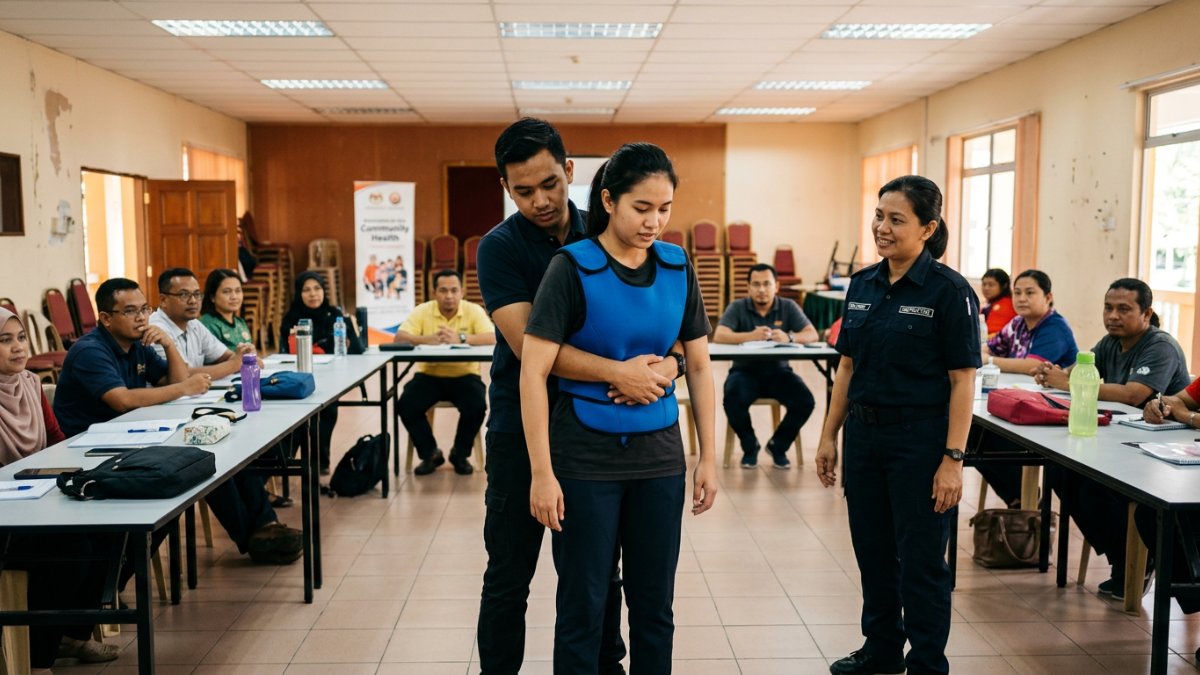
Choking can happen at a family dinner, in a school canteen or at an office lunch. The people nearby have very little time to act, and the right response is a physical skill. Like any physical skill, it needs practice, and that is where emergency and first aid training equipment comes in.
At Neolee Rehab Supply, our emergency and first aid range includes real AEDs as well as training equipment for classes. This article explains one training tool, the anti-choking trainer vest: what it does, who uses it and why it is never a rescue device. It is general information only, and the skill itself should be learned from a qualified first aid instructor.
Why choking practice needs a training tool
The usual first aid response to an adult who is choking and cannot breathe includes abdominal thrusts. You may know these as the Heimlich manoeuvre. They involve firm, quick pressure on the upper belly.
Practising that on a real classmate is not a good idea. Done with full force, it can hurt the person playing the patient. Done gently to avoid harm, it teaches the wrong amount of force.
Reading about it is not enough either. People who have only read the steps may freeze or hesitate in a real emergency. Hands-on practice builds the confidence to act quickly.
A trainer vest solves this problem. The student playing the patient wears the vest, and the classmate practises on the vest instead of on the body. The student gets a realistic feel for the movement without anyone being hurt.
How the trainer vest shows a correct thrust
Our Act Fast Anti Choking Trainer Vest (Blue) is made of neoprene, a soft, flexible material used in wetsuits. It has a clear PVC airway inside, so the class can see a foam plug sitting in the “throat”.
When a student places their hands correctly and gives a correct thrust, the soft foam plug shoots out of the airway. This gives instant, visible feedback. Everyone in the room can see whether the technique worked.
A navel marker on the front shows where the hands should go. This helps students find the right spot between the navel and the rib cage without guessing.
The vest can be used with the “patient” standing, sitting or lying down. It also supports practice of self-rescue, using the back of a chair. Adjustable shoulder and waist straps with snap buckles fit various adult sizes, so students can swap quickly.
Who uses the vest in a class
The vest is made for group teaching. Typical users include:
- First aid and CPR instructors running courses for the public or for workplaces
- Schools, colleges and community safety programmes
- Fire departments, rescue squads and medical training institutions
- Companies that run in-house refresher sessions for their first aiders
Families sometimes ask whether they can buy a vest to practise at home. A vest is a teaching tool, so it is most useful with an instructor who can watch and correct the technique. A home group, such as parents in a playgroup, may arrange a session with a qualified trainer who brings or uses the vest.
It works best as part of a full first aid course, led by someone qualified to teach it. The instructor explains when abdominal thrusts are used, when they are not and what else to do, such as calling for emergency help.
For a workplace building up its first aid readiness, our article on workplace AED readiness covers devices, pads, batteries and training equipment together.
Running a session with the vest
A trainer vest is simple to use, but a little planning makes a class smoother. Here are a few practical points for organisers:
- Check the vest, straps and airway before the class starts
- Have the foam plug ready, and a spare if one goes missing
- Plan enough time for every student to have several tries
- Pair students of similar size where possible, so the vest fits well
- Let students take turns wearing the vest and practising
Hygiene matters when a vest passes from person to person. Follow the product instructions for cleaning between students and after the class.
Ask each student to explain what they would do before they start, such as checking whether the person can cough or speak. This links the hands-on part to the decisions they learned earlier in the course. The instructor can then correct any gaps on the spot.
Keep the mood calm and practical. Some students feel nervous about choking scenarios, especially if they have seen one happen. A good instructor gives them time and does not rush the practice.
After the class, store the vest flat and dry, away from heat. A well-kept vest is ready for the next group.
Training equipment is not an emergency device
This point is important enough to state plainly. The trainer vest is for practice only. It cannot help a real person who is choking. Never keep it in a first aid kit as if it were rescue equipment.
The same rule applies to other training equipment in our range, such as AED trainers. A trainer looks similar to the real device but does not deliver a shock. Mixing them up in an emergency costs precious time.
Store training equipment separately from real emergency equipment, and label both clearly. Make sure everyone in the building knows where the real equipment is kept. In a real choking emergency, call for help and follow what you learned in your first aid course.
To check what else your workplace or home should have ready, see our emergency and first aid readiness checklist.
Frequently Asked Questions
1. Can the trainer vest be used on a real person who is choking?
No. It is a training tool for classes only and has no use in a real emergency. In an emergency, call for help and use the skills from a proper first aid course.
2. Can I learn choking first aid from an article?
An article can explain what the training involves, but it cannot replace hands-on practice. Learn the skill from a qualified first aid or CPR instructor.
3. How many students can share one vest?
A whole class can take turns, since the straps adjust for different adult sizes. Plan enough time so each student gets several tries.
4. How is the vest cleaned between students?
Follow the cleaning instructions that come with the product, both between students and after the class. Let it dry fully before you store it.
5. What else does a workplace first aid kit need?
That depends on your workplace and its risks. Our emergency and first aid readiness checklist covers the main items, including AEDs and training.

