
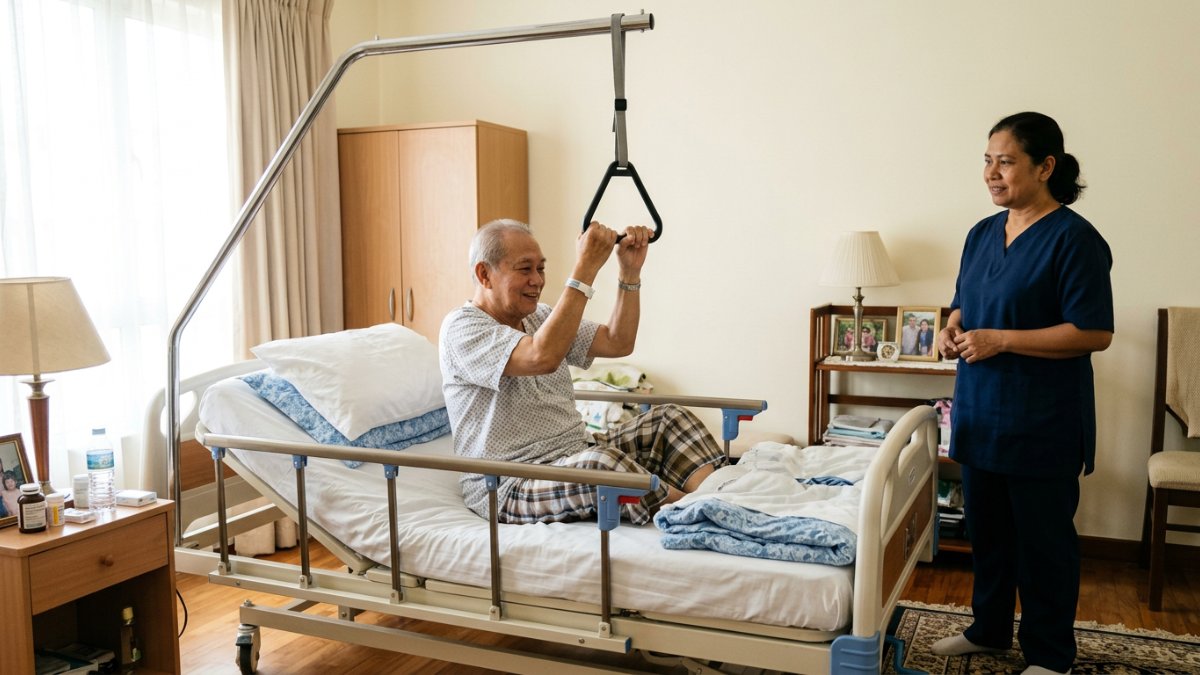
Moving up the bed or sitting up to eat sounds simple. For someone recovering from hip surgery or a stroke, it can mean calling for help many times a day. Some of these people still have good strength in their arms, and a trapeze bar lets them use it.
At Neolee Rehab Supply, the Patient Trapeze Bar sits among the medical devices we supply for patient handling at home. This guide covers who it suits, how to set it up and the daily checks that keep it steady. It is general product information, not medical advice, so check with the person’s doctor or physiotherapist before they start using one.
Who a trapeze bar is meant for
A trapeze bar is a frame that stands over the bed with a handgrip hanging down. The person holds the grip and pulls with their arms to lift, turn or shift their body. It is also known as a monkey bar.
Our Patient Trapeze Bar (Monkey Bar) is free-standing, so it needs no drilling into walls or ceilings. It has a weight capacity of 120kg. It is made for people with limited lower-body strength who can still use their arms well.
Typical users include people recovering from hip, spine or leg surgery, and some people recovering from a stroke. Older adults who need help moving in bed may also benefit.
Like other medical devices for the home, it works best when it is matched to the person and set up with care.
It is not right for everyone. Someone with weak arms, painful shoulders or a recent upper-body injury may strain themselves pulling up. A person who is confused may use it in ways that are not safe. This is why the care team should decide first.
A trapeze bar is one of several aids for moving in bed. Our article on matching patient transfer equipment to the task explains how to choose the right aid for each care task.
Checking the room and the bed first
The bar stands on a large base that slides under the bed. On our model, the base measures 90cm x 70cm. Check that the space under the bed is clear of storage boxes, cables or a commode.
Look at the ceiling height and any ceiling fan. The frame adjusts from 174cm to 230cm in height, so measure the room before you set it up. A spinning fan and a steel frame should never be close.
The bar works with most standard or hospital beds. Take care with beds that change height. On our Neolee Electric Hospital Bed (3-Function) with Mattress, the height runs from 42 cm to 74 cm. Set the trapeze with the bed at the height the person uses most, then check the grip at the other heights too.
Put the bed brakes on before every use. If the bed rolls while someone pulls on the bar, they can lose their grip.
Setting the height and grip position
The handgrip should hang where the person can reach it without straining. On our model, the grip adjusts from 25cm to 40cm, and the overall frame height adjusts as well. A good starting point is a grip the person can hold with a slight bend in the elbows while lying down.
Too high, and they have to stretch and may lose balance. Too low, and the grip may knock their face or chest when they let go.
Set the position along the bed carefully. Most people use the grip to lift their chest and shoulders, so it usually hangs above the upper body. Ask the physiotherapist to watch the first few tries and adjust it.
Tighten every adjustment knob or pin after you change a setting. Give the frame a firm shake by hand before anyone uses it.
Write the settings down once they are right, or mark them with a small piece of tape. Then anyone in the family can put the bar back the same way after cleaning or moving the bed. This also helps when a new carer or relative takes over for a few days.
Showing the person how to use it
Explain the movement before they try it. Usually, the person holds the grip with both hands, bends their good knee if allowed and pulls gently while pushing with the heel. This helps them move up the bed without dragging their skin on the sheet.
Start slowly and stay beside them for the first few times. Watch for breath-holding, which some people do when they strain. Remind them to breathe out as they pull.
Keep the movements small at first. A short shift up the bed is enough for the first day. As the person grows more confident, the physiotherapist may suggest other ways to use the bar.
A trapeze bar supports independence, but it does not replace a carer. Someone should still be nearby when the person sits up or gets out of bed. Some people also need a steady handhold at the side of the bed for standing. Our Portable Bedside Handrail slides under the mattress and has a 110kg weight capacity.
Stop and ask for advice if the person has new pain, dizziness or breathlessness when using the bar.
Daily checks to keep it steady
A quick check each morning takes less than a minute. Here is what to look at:
- The base is fully under the bed and sitting flat on the floor
- All knobs and pins are tight, with no wobble when you shake the frame
- The handgrip and its fittings show no cracks, wear or rust
- Nothing is stored on or hanging from the frame
- The bed brakes are on
If anything looks loose or damaged, stop using the bar until it is fixed. Contact our team if you are not sure whether something is safe.
Frequently Asked Questions
1. Can everyone who is in bed use a trapeze bar?
No. It suits people who still have good arm strength and are allowed to pull with their arms. The doctor or physiotherapist should decide.
2. Does the trapeze bar fit a normal bed?
Our free-standing model works with most standard or hospital beds. Its 90cm x 70cm base slides under the bed, so check that the space is clear.
3. How high should the handgrip be?
Within easy reach while lying down, usually with a slight bend in the elbows. The physiotherapist can fine-tune the height and position.
4. Does a trapeze bar replace a carer?
No. It helps the person move more on their own, but someone should stay nearby, especially when they sit up or get out of bed.
5. How do I know if the trapeze bar needs attention?
Check it each morning for wobble, loose knobs, a worn grip or rust. Stop using it until any problem is fixed.

