
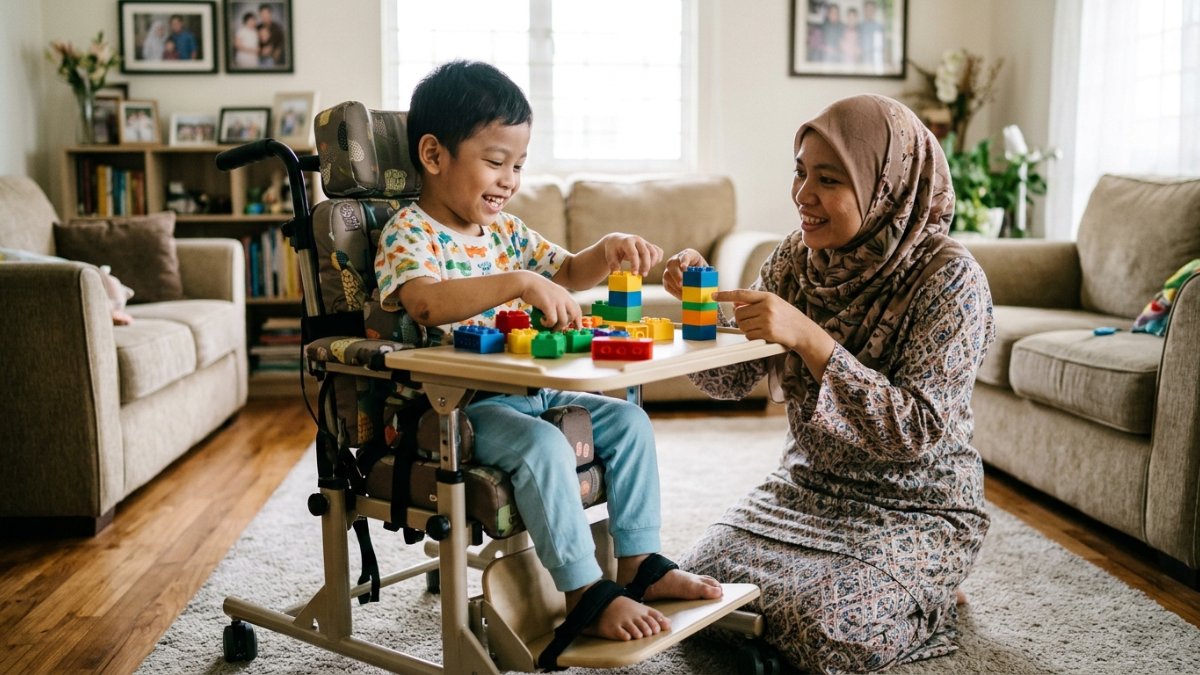
Sitting up well changes a lot for a child with low muscle tone or cerebral palsy. With the right support, they can use their hands to play, see the people around them and join in at mealtimes. Without it, they may slump, tire quickly or need an adult to hold them the whole time.
At Neolee Rehab Supply, two seats from our children’s products are often asked about by parents and therapists. This children’s product guide looks at the corner chair and the chair frame. It covers what each one is for and how they can work together across a normal day. It is general equipment information, not medical or therapy advice.
Why supported seating helps meals and play
Many children with cerebral palsy find it hard to hold their trunk and head steady on their own. All their effort goes into staying upright, so there is little left for reaching, chewing or looking around. Supported seating takes over part of that work.
When the body is steady, the hands are freer. A child who is well supported may be able to hold a toy, point at a picture or bring food towards their mouth. Parents often notice that their child seems more alert and engaged.
Supported seating also helps social time. A child who sits at the same level as their family can join the conversation at meals and share a game on the mat. Small moments like these matter to children and parents alike.
Different activities need different heights. Play often happens on the floor with siblings, while meals and homework happen at a table. That is why many families end up with more than one seat.
The corner chair for floor-level play
A corner chair sits low, close to the floor. The child sits with their back in the corner of the seat and their legs out in front. This position gives support on both sides and lets the child play at the same level as other children.
Our Joyride Portable Child Corner Chair has a 90-degree curved backrest with built-in side support. An adjustable X-style chest harness helps reduce slumping forward. There is a padded headrest with a support strap for children who need help holding their head up.
A cushioned leg abductor, also called a pommel block, sits between the knees. It helps keep the hips and legs in a steady position. The padding has a wipeable vinyl cover, which is handy around snacks and painting.
The chair is portable and has castors, so it can move between rooms. It suits therapy rooms, classrooms and home.
Place it on a clear, flat floor with space around it for toys and a playmate. Keep it away from steps and sharp furniture corners.
The chair frame for the table
For meals, homework or table play, the child needs to sit higher and closer to the work surface. A chair frame does this. It holds the child upright at a height where the hands meet the table.
Our Joyride Child Chair Frame is also called a Sitting Posture Correction Chair. It has an adjustable footrest and a removable activity table. The table gives the child a place to practise arm and hand skills, eat or play with toys.
The Medium size has a seat width of 32 cm and a seat depth of 37 cm. Its seat sits 47 cm from the floor, with a 36 cm backrest. It also comes in a Small size, and both sizes run on 2-inch castors.
With the footrest set at the right height, the feet stay flat and supported. This small detail helps the child feel steady and sit for longer.
Push the chair frame close to the dining table if you remove the activity table. Your child then eats with everyone else, at the same table. Check that the chair stays steady when the child leans forward to reach their plate.
Using both across a normal day
Here is how one family might use both seats in a typical day:
- Breakfast in the chair frame, with the activity table in place
- Floor play with a sibling in the corner chair after breakfast
- A rest out of the seat, lying down or with free movement as advised
- Lunch and a drawing activity back in the chair frame
- Storytime in the corner chair in the evening
Changing seats through the day gives the body a break from one position. It also matches the seat to the activity, rather than asking one chair to do everything.
Keep a simple note of how long your child sits in each seat and how they seem afterwards. If they become tired, upset or uncomfortable at the same point each day, share that with the therapist.
No seat should be used for hours without a break. Watch for signs of tiredness, discomfort or red marks where straps or pads touch the skin.
Fitting and checking with the therapist
These are medical seating products, and the fit matters. We advise using the chair frame only after talking to the child’s physiotherapist, occupational therapist or rehabilitation doctor. The same goes for the corner chair.
The therapist can check the seat size, the strap positions and how long your child should sit. They can also tell you when a change is needed, because children grow and their needs shift.
Bring the chair to therapy sessions if you can. Seeing the child seated helps the therapist adjust it on the spot. For a wider look at choosing equipment, our checklist for choosing children’s mobility and positioning products covers questions to ask before you buy.
Frequently Asked Questions
1. What is the difference between a corner chair and a chair frame?
A corner chair supports the child at floor level for play. A chair frame holds the child higher, at table height, for meals, learning and table play.
2. Can one child use both seats?
Yes. Many families use the chair frame for meals and the corner chair for floor play, so the seat matches the activity.
3. Which size of chair frame should we choose?
The chair frame comes in Small and Medium. Ask the child’s therapist to check the seat width, depth and height against your child.
4. How long can a child sit in supported seating?
That depends on the child, so ask the therapist. Plan regular breaks and watch for tiredness or red marks.
5. Who should set up the chair for my child?
A physiotherapist, occupational therapist or rehabilitation doctor should advise on the fit and straps. They can adjust it as your child grows.

